
Hodgy Beats, born Gerard Damien Long, is an American rapper, singer, and record producer best known as a founding member of the hip-hop collective Odd Future (OFWGKTA). The most credible net worth range for him sits somewhere between $600K and $1.5 million as of 2026, though you'll find wildly different numbers online. The honest truth is that no public ledger confirms an exact figure, and the estimates floating around range from $600K to $6 million depending on which aggregator site you land on. If you want to dig into sez on the beat net worth specifically, the same approach applies: verify primary sources and compare multiple credibility-checked estimates. The $6 million end is almost certainly inflated. The lower end is more defensible given his catalog size, release activity, and the financial realities of independent rap careers in the streaming era.
Hodgy Beats Net Worth 2025: Estimate, Breakdown, and How

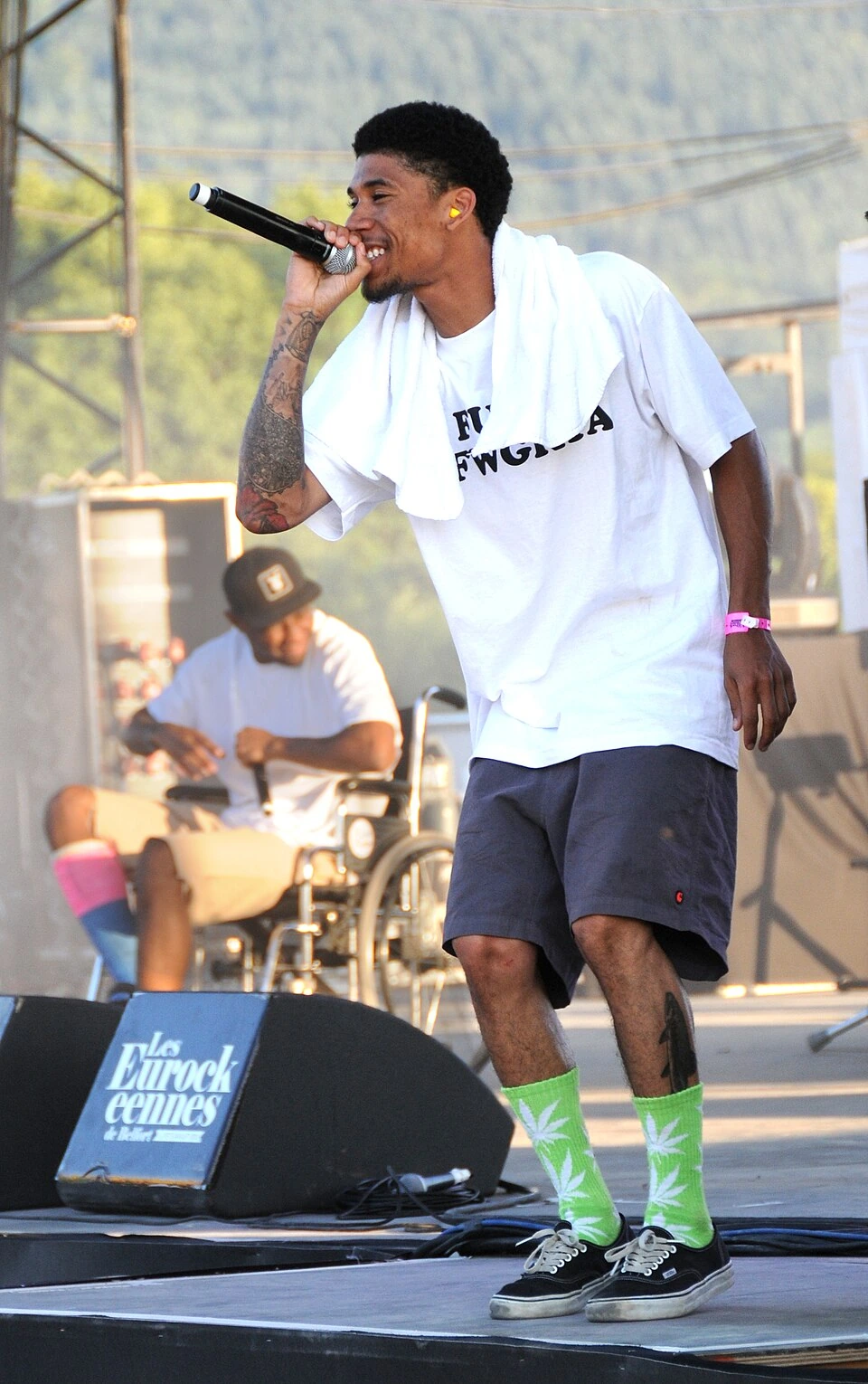
Who Hodgy Beats is (and why attribution matters)
Gerard Long launched under the name "Hodgy Beats" around 2008 and became one of the most recognizable voices in the Odd Future universe alongside Tyler, The Creator, Earl Sweatshirt, and others. His alias evolved over time, first dropping the "Beats" suffix to go simply by "Hodgy," and then in December 2023, he made a formal public rebrand to "jerry" (stylized as jerry.) following a profile in GQ. That means his artist identity now spans three distinct monikers: Hodgy Beats, Hodgy, and jerry. If you're trying to track his credits, royalties, or catalog, you need to know all three names. Music databases like MusicBrainz explicitly list all three as aliases for the same person, tied to Gerard Long.
The attribution question is genuinely important, not just an academic detail. Credits under "Hodgy Beats" on a 2010 MellowHype project are still generating royalties today, and those royalties flow to Gerard Long under whatever publishing registrations exist for that era. When estimating his net worth, you're really estimating the combined financial output of a 15-plus-year catalog split across three brand identities. Confusing him with another Gerard Long (a common enough name) or missing the jerry rebrand will leave you with an incomplete picture.
Current Hodgy Beats net worth estimate
The most defensible estimate places Hodgy's current net worth somewhere in the $600K to $1.5 million range. Sites like FamousNetWorth put him at approximately $600K, while NetWorthList inflates the figure to $6 million with no apparent methodology backing that number up. CelebrityNetWorth, which is generally more consistent in updating estimates, doesn't surface a firm figure in available data as of mid-2026. The $6 million figure should be treated as a red flag, not a benchmark. It's disconnected from what we know about his output, release frequency, and the economics of independent rap in the streaming era.
| Source | Estimate | Reliability |
|---|---|---|
| FamousNetWorth | $600K | Low — no stated methodology |
| NetWorthList | $6 Million | Very Low — implausible without primary basis |
| CelebrityNetWorth | Not confirmed in available data | Moderate — generally updated but requires live page check |
| Research-based range (this article) | $600K – $1.5 Million | Moderate — based on catalog size, income stream logic, and streaming era economics |
A range of $600K to $1.5 million reflects someone with a legitimate multi-year catalog, consistent but not massive streaming numbers, and limited evidence of major outside business ventures or label deals generating significant backend income. It also accounts for the fact that Odd Future's earlier catalog was not always distributed under optimal royalty structures, and mixtape-era output notoriously generates less publishing income than commercially released albums.
How net worth estimates are calculated for music producers and rappers
Net worth estimation for an artist like Hodgy works by aggregating likely income streams and subtracting known or estimated liabilities and living expenses. For musicians, the dominant variables are catalog value, publishing/royalty income, performance income, and any business or brand revenue. Catalog value is the trickiest: it depends on streaming numbers, sync licensing activity, and how well the artist's publishing is registered and administered.
Performance royalties, for example, are split between a writer share and a publisher share, typically framed as a 50/50 division. If an artist is registered only as a songwriter and hasn't claimed or assigned their publisher share through a publishing administrator, they may be leaving money on the table. This is a real issue for artists who built careers before publishing administration became more accessible through platforms like DistroKid's publishing add-on or services like Songtrust. A publishing administrator handles registration of eligible songs and collects both shares on the creator's behalf when relevant, including through systems like YouTube Content ID. Whether Hodgy's early catalog is fully registered and actively administered is something only someone with access to his PRO (performing rights organization) account would know.
Streaming calculators used by sites like NetWorthSpot estimate income from public social and streaming metrics rather than actual royalty ledgers. That's a useful starting point but prone to huge errors, because streaming royalty rates vary by platform and territory, and they say nothing about sync licensing, live performance fees, or publishing ownership. The gap between a $600K estimate and a $6 million estimate for the same artist tells you less about Hodgy specifically and more about the fact that these sites are working from entirely different (and mostly unverified) assumptions.
Income streams breakdown for Hodgy Beats
Hodgy's income likely comes from several distinct channels, each with different magnitudes and reliability depending on the era and how his rights are structured.
- Streaming royalties: Ongoing income from Spotify, Apple Music, YouTube, and other platforms for his solo catalog under Hodgy Beats, Hodgy, and now jerry. Odd Future and MellowHype tracks generate streams independently as catalog-era content.
- Publishing and performance royalties: Registered works at a PRO (ASCAP or BMI) generate performance royalties whenever those songs are played on radio, TV, or streamed. The writer share goes directly to him; the publisher share depends on whether he has a publishing deal or admin arrangement.
- Production fees: Though primarily known as a rapper, Hodgy's "Beats" identity reflects early production activity. Production credits can carry mechanical royalties and one-time production fees from beats sold or licensed.
- Songwriting credits: Shazam credits pages, for example, show Gerard Long listed under composition and lyrics for jerry-era songs. Every song he writes where he holds a credit is a potential royalty-generating asset.
- MellowHype and Odd Future group catalog: As a core member of MellowHype (with Left Brain) and Odd Future, Hodgy's share of group project royalties adds a layer of passive income from a catalog that dates to 2009 with YelloWhite and continued through BlackenedWhite (2010) and beyond.
- Live performances and appearances: Touring and festival income is intermittent but can represent significant one-time earnings, particularly during Odd Future reunion activity or solo shows around album releases.
- Sync licensing: Film, TV, and commercial placements of Odd Future-era tracks are a realistic income source, though the actual amounts are private and depend on negotiated license fees.
- New releases under jerry: The 2024 album lovemesooner (released February 14, 2024) creates fresh publishing assets and potential sync interest under his new brand identity.
The honest assessment is that the largest and most reliable slice of his income is probably the combination of streaming catalog royalties and publishing income from a decade-plus of releases. Production fees and performance income are real but irregular. Business ventures and brand deals don't appear to be a significant documented factor based on available public information.
Career timeline and wealth trajectory
Early catalog era (2008–2011)

Hodgy's financial story starts with The Dena Tape in 2009, widely cited as one of the earliest Odd Future solo projects. He and Left Brain launched MellowHype in the same year with YelloWhite, followed by BlackenedWhite in 2010. This era generated cultural cachet more than immediate income. The old-school label economics of the era, combined with the mixtape culture that gave Odd Future its reach, meant that a lot of the early output was given away for free or distributed through channels that didn't generate streaming royalties at scale. That said, any tracks registered with a PRO during this period were accumulating performance royalty history.
Peak Odd Future activity and solo output (2011–2016)
As Odd Future blew up commercially, the group's affiliated artists saw real income increases. Hodgy appeared on major releases, including Tyler, The Creator's Goblin album (he's credited as a guest vocalist on "Analog"), which expanded his royalty footprint through a higher-profile catalog. His solo debut studio album, Untitled (2016), represented a shift toward commercially distributed music that could generate mechanical and streaming royalties at scale. This period is likely where the strongest foundation of his current net worth was built.
Mid-career slowdown and rebrand (2017–2023)
Between 2017 and 2023, Hodgy's release frequency dropped and his public profile was lower compared to peers like Tyler, whose net worth trajectory went in a very different direction due to Grammy wins, brand deals, and his Golf Wang clothing line. During this period, Hodgy's income would have been primarily passive, driven by catalog royalties rather than new release cycles. This is the phase where net worth likely plateaued or grew slowly.
The jerry era (2023–present)
The December 2023 GQ rebrand story and the February 2024 release of lovemesooner signal an active new chapter. New releases mean new publishing assets, renewed streaming activity, and potential sync licensing opportunities. If the jerry identity takes commercial hold, this phase could represent a meaningful upward turn in his financial trajectory. It's early, but the activity is real and documented.
How to verify the number yourself

If you want to sanity-check Hodgy's net worth rather than just take a website's word for it, here's where to actually look. Start with MusicBrainz, which gives you a structured, alias-linked view of his catalog across all three names (Hodgy Beats, Hodgy, jerry). From there, you can build a working list of credits and release timelines. Cross-reference that with verified music credit databases like Jaxsta, which positions itself as a verified credits resource for the industry.
For royalty logic, check his ASCAP or BMI profile (both are publicly searchable to some degree) to see what works are registered. If you find a song registered without a publisher share claimed, that's a sign that publishing income from that track may be lower than it could be. Shazam credits pages can also surface songwriter attribution signals, like the Gerard Long credits visible on jerry-era songs.
For streaming-based estimates, look at platform follower counts and approximate monthly listener numbers, then apply a rough royalty rate. Spotify pays approximately $0.003 to $0.005 per stream. If an artist averages 500,000 monthly streams, that's roughly $1,500 to $2,500 per month in Spotify royalties alone, before distribution fees. Scale that across platforms and years, and you start to build a rough floor for catalog income.
- Search MusicBrainz for "Hodgy" or "Gerard Long" and confirm aliases to map his full catalog across all brand names.
- Use Jaxsta or AllMusic to verify specific production and songwriting credits.
- Search ASCAP or BMI public repertoire databases using "Gerard Long" or track titles to find registered works.
- Check Shazam credits pages for recent jerry-era songs to see songwriter attribution.
- Apply a conservative streaming royalty estimate ($0.003–$0.005/stream) to publicly visible monthly listener counts as a rough income floor.
- Look for GQ, Complex, or verified interview sources for any disclosed business deals, label arrangements, or publishing agreements.
- Avoid people-finder sites and generic public records databases that may conflate his identity with other Gerard Longs.
Red flags to watch for
When a site claims $6 million for Hodgy with no methodology and another claims $600K with the same lack of sourcing, that's not a disagreement about data. That's two sites guessing independently. Sites that recycle prior estimates without update timestamps, provide no income source breakdown, and don't acknowledge the alias complexity of his career (Hodgy Beats vs Hodgy vs jerry) are not doing analysis. They're filling a template. Treat those numbers as noise unless you can trace them to a primary source like a documented deal, an interview disclosure, or a PRO registration. Estimates for "buddah bless this beat" net worth follow the same pattern of guesswork unless you can tie figures to documented deals and royalty registrations buddah bless this beat net worth.
What could move his net worth next
The jerry era is the most important variable right now. A sustained run of releases under the new brand, especially if any tracks land sync placements in film or TV, could meaningfully increase the value of his publishing catalog. Sync deals in particular can be one-time fees that range from a few thousand dollars for small productions to six figures for major placements, and they also tend to drive streaming spikes that compound royalty income.
Catalog optimization is another lever. If older Hodgy Beats and MellowHype tracks are not fully registered with a publishing administrator, getting those works properly set up through a service like Songtrust or a full publishing deal could unlock retroactive or forward-looking income that wasn't being collected. This is a real and underappreciated move for artists from the mixtape era.
Touring and live appearances around new jerry releases would also contribute real cash, especially if Odd Future nostalgia drives festival interest. Some of his peers, like producers and beatmakers tracked in this space (Murda Beatz, Mustard, and others of a comparable generation), have seen their net worth trajectories shift significantly based on a single major collaboration or business pivot. If you're also comparing beatmaker numbers, see dp beats net worth for how these estimates differ for producers versus rappers net worth trajectories shift significantly. If you want to compare how producer and rapper wealth can vary by branding and major collaborations, looking into Mustard’s beat-driven career and reported net worth can be a useful benchmark Mustard’s net worth. If you're also curious about beatmaker earnings, you can compare how Murda Beatz net worth is estimated using similar income streams like production credits and royalties. Hodgy's next move in that direction is the most likely catalyst for a notable net worth change in either direction.
For now, the most accurate thing you can say is that Hodgy Beats/jerry sits in the mid-six-figure to low-seven-figure wealth range, built primarily on catalog royalties from a 15-year career, and that the jerry rebrand represents the clearest near-term opportunity to grow that number. Keep an eye on new releases, credited placements, and any public business disclosures. Those are the real signals.
FAQ
Why do net worth sites show such a huge gap between $600K and $6 million for Hodgy Beats?
No, the number most people cite as “Hodgy Beats net worth” is really an estimate of Gerard Long’s combined income across Hodgy Beats (older credits), Hodgy (mid-period credits), and jerry (post-2023 rebrand). If a site ignores the jerry or Hodgy aliases, it can undercount or misattribute catalog value.
What kind of evidence should I look for before trusting any Hodgy Beats net worth estimate?
You can sanity-check quickly by focusing on royalty-bearing outputs and whether they were commercially distributed, not mixtape-era free distribution. The highest-signal items are registered tracks that appear in PRO databases, later commercially released albums, and any documented publishing/admin relationships for the catalog.
Could Hodgy be “leaving money on the table” from old catalog royalties?
If Hodgy was credited only as a songwriter (writer share) and his publisher share was not correctly claimed or administered, his net receipt from some tracks could be meaningfully lower than expected. The article explains how this happens in general, but the practical test is whether the track’s registrations and splits appear consistent across multiple royalty sources.
Why are streaming-based net worth calculators often unreliable for rappers like Hodgy Beats?
Yes. Streaming-only calculators can mislead because they assume uniform royalty rates and ignore publishing ownership, territory splits, mechanical royalties, and sync licensing. Even if a platform follower estimate seems reasonable, two different mixes of publishing and distribution rights can produce very different payout totals.
How does the jerry rebrand change the way I should estimate Hodgy Beats net worth?
For Hodgy, the jerry rebrand matters because new releases under the new name can add fresh publishing assets, potentially new Content ID handling, and an easier way for databases to consolidate credits. If you see jerry credits stacking consistently across multiple releases, that is usually a better sign than a single spike.
What’s the most realistic way sync licensing would show up in Hodgy’s financial picture?
Sync income can be uneven, and it often depends on whether the music is actively pitched and properly registered for licensing. The actionable approach is to watch for music placements credited to “jerry” and then verify songwriter/publisher registration where possible, since sync fees are typically one-time cash plus downstream streaming momentum.
Why can it be hard to estimate net worth for independent rap careers even when the artist is well-known?
Most independent rappers have limited downside visibility because touring and business income can be private, and some early releases were distributed through channels that may not generate scalable royalty data. So if you see a net worth number that assumes large label-like backend payouts, treat it as a high-risk guess.
How can I tell whether a specific net worth claim is just inflated template content?
If the $6 million claim is missing methodology, try to bracket the estimate using catalog time horizon. A useful decision aid is to ask, “Does the number require major label-level distribution and consistent monetization across 15+ years?” If not, the estimate is probably inflated.
What’s the best way to avoid crediting the wrong Gerard Long when researching Hodgy Beats net worth?
To avoid mixing people with the same name, always match credits to Gerard Long plus the correct alias for the release era. A good practical workflow is: build a credit list in MusicBrainz (all three aliases), then confirm that PRO registrations and release metadata align with the same identity and timeline.
If I want to estimate a “floor” net worth for Hodgy, what income streams should I prioritize?
Start with royalties you can verify conceptually (PRO registrations and credited releases), then treat live performance and one-off business income as secondary. If you want a stronger floor estimate, focus on recurring catalog indicators like ongoing album/track availability, consistent streaming, and recent release activity under jerry rather than one-time headlines.