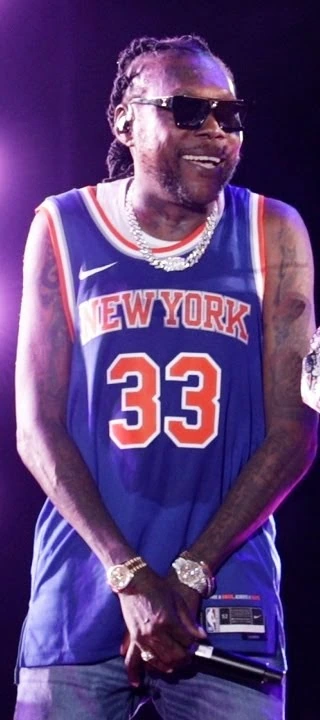
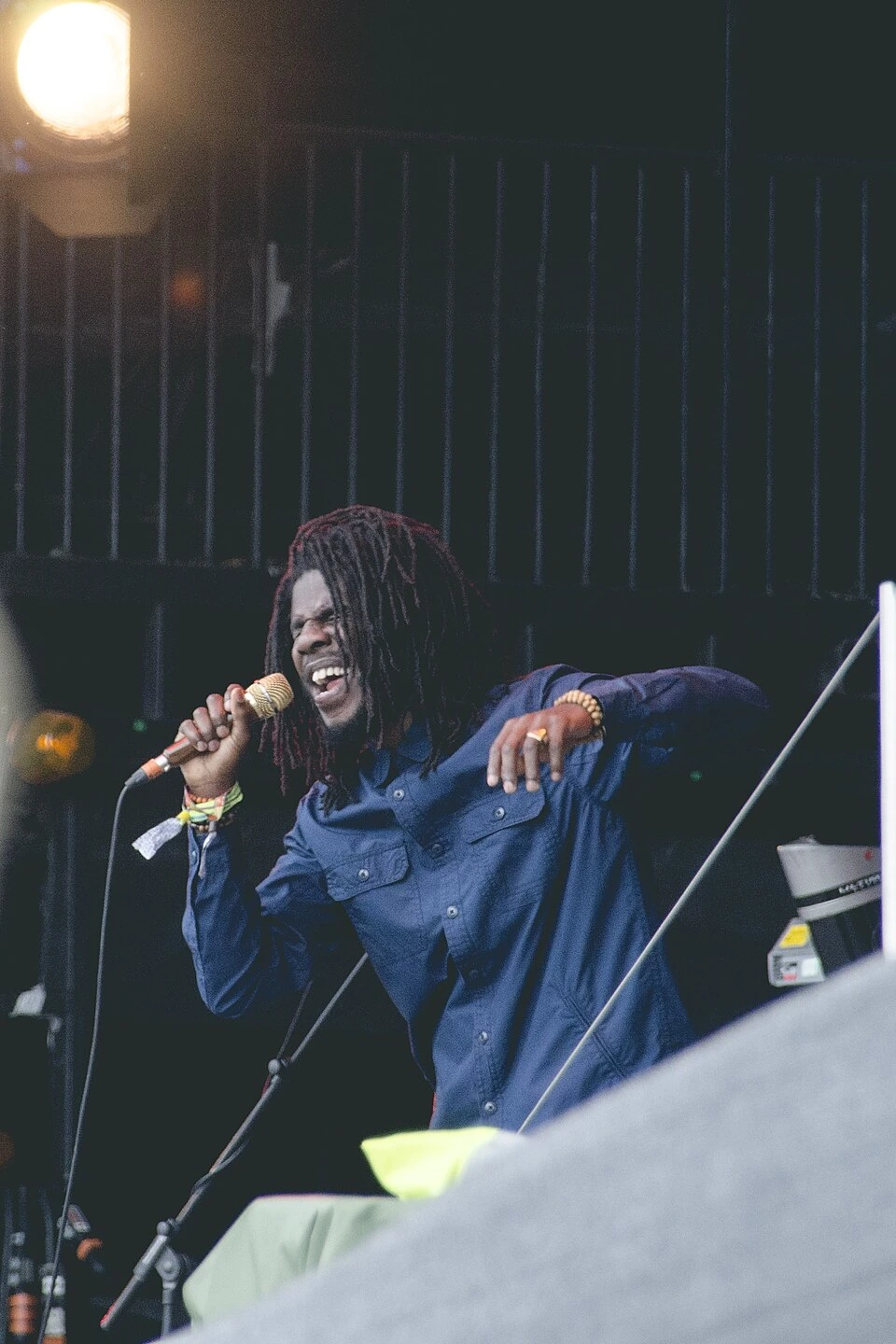
Who Is Vybz Kartel and Why His Wealth Is Tricky to Nail Down

Vybz Kartel, born Adidja Palmer in Kingston, Jamaica, is arguably the most culturally dominant dancehall artist of the past two decades. His influence on the genre is comparable to what Jay-Z did for New York rap, he shaped slang, fashion, sound, and the business architecture of Jamaican music. That level of impact usually comes with serious money, but in Kartel's case, the financial picture is genuinely complicated.
He was convicted of murder in 2014 and spent over a decade incarcerated, which froze his ability to tour, sign deals, or actively manage his business affairs in the way a free artist would. Then in 2024, the UK Privy Council quashed his conviction and remitted the matter back to Jamaica's Court of Appeal. On July 31, 2024, the Court of Appeal ruled against a retrial, and Justice Marva McDonald-Bishop's reasoning explicitly stated that 'the interests of justice do not require a new trial.' Kartel and his co-accused walked free, ending what the Jamaican Gazette described as a decade-long legal battle.
So you have a globally recognized artist who spent years unable to perform, whose business dealings were conducted at arm's length or through representatives, and who is now re-entering the live market at significant scale. Estimating net worth under those conditions requires a lot of educated inference, which is exactly why the numbers vary so much across sources.
How Net Worth Estimates Actually Get Calculated
Net worth, at its core, is total assets minus total liabilities. For a private individual like Vybz Kartel who has never filed a public company prospectus or SEC disclosure, there is no single authoritative document to pull from. What net worth sites do instead is triangulate from public signals: reported performance fees, streaming data, known publishing deals, real estate records, and any court or business filings that become public. The result is always an estimate, not an audit.
The reason different sites report wildly different numbers comes down to methodology. A site that only counts conservative, verifiable income will land near the low end. A site that tries to model catalog value, factor in streaming growth curves, or account for the implied value of an independent label will land much higher. Neither approach is wrong per se, they're just answering slightly different questions. When you see a range from $1 million to $5 million for the same artist, that's the gap between 'what we can confirm' and 'what we can reasonably infer.'
Where His Money Actually Comes From
Music Royalties and Publishing

Kartel is a prolific songwriter and producer, not just a performer. That distinction matters enormously for wealth. Performers earn from shows and record deals. Songwriters and publishers earn every time a song is played, streamed, licensed, or broadcast. If Kartel holds publishing rights on a significant portion of his catalog, those royalties accumulate whether he's free or incarcerated. JACAP (the Jamaica Association of Composers, Authors and Publishers) is the collecting society that would handle performance and mechanical royalties on the Jamaican side, with international distribution handled through affiliated societies like BMI. The actual size of those royalty checks is private, but given the sheer volume of his catalog and its continued relevance, the annual publishing income is almost certainly meaningful.
It's worth noting that royalty flows in Caribbean music can be contested and inconsistently documented. A 2020 report highlighted that collaborator Sheba publicly stated she never received royalties from Vybz Kartel joint tracks, which tells you something about how these arrangements can break down or remain opaque even to people directly involved.
Streaming Income
Vybz Kartel's catalog has streamed continuously through his incarceration years. Dancehall's global audience expanded significantly through the 2010s and 2020s, partly driven by the genre's influence on Afrobeats and mainstream pop. His older tracks remain in heavy rotation, and new material was released even while he was imprisoned. The per-stream rates on Spotify and Apple Music are fractions of a cent, but at the volume his catalog generates, those fractions add up to a consistent income stream. Exact figures aren't public, but artists with comparable catalog depth and streaming numbers in similar genres often generate six figures annually from streaming alone.
This is where the post-release numbers get interesting. In 2025, Trinidad promoters reportedly paid Vybz Kartel and his team more than US$1.1 million before a scheduled performance that was ultimately cancelled. Trinidadian authorities separately launched a probe into how promoters sourced US$950,000 in payments to Kartel for that engagement. Even if the show didn't happen, those numbers signal the market rate for his appearances. A headliner commanding $900,000 to $1.1 million per show is operating at a level that can move the net worth needle significantly with just a handful of bookings per year.
On the legal side of live income, as recently as March 2026, a judge dismissed a lawsuit related to Kartel's US shows, where a company had claimed entitlement to between 5 and 25 percent of gross proceeds from US events through January 2028. The case being dismissed protects future US performance income from that specific claim, which is directly relevant to his financial trajectory going forward.
Label Ownership and Catalog Control
Kartel operates Adidjahiem Records, his independent label, and has taken active steps to expand it including bringing the label stateside. Independent label ownership is one of the most significant wealth multipliers in modern music, it means owning master recordings rather than licensing them to a major. Labels like Greensleeves and Mixpak have been associated with his releases at various points, but the degree to which Kartel retains master ownership versus licensing arrangements is not publicly audited. If he controls even a portion of his masters, the catalog value alone could represent a significant asset, especially given how publishing and master catalogs have been acquired at premium multiples in recent years.
Endorsements and Branding
Before and during his incarceration, Kartel had notable branding ventures including his Whitening skincare line, which became a cultural talking point in Jamaica. Endorsement and product income is difficult to trace publicly, but it contributed to his pre-2014 revenue and may re-emerge as his public profile recovers post-release.
Assets and Liabilities: What Gets Counted and What Gets Missed

Net worth estimates for artists like Kartel typically count music catalog value, estimated real estate holdings, business entities, and projected future earnings from touring. What they routinely miss or undercount includes: outstanding legal fees and judgments (which can be substantial after a decade of appeals), outstanding management or label advances, contested royalty claims from collaborators, and the costs associated with rebuilding infrastructure after years of inactivity. On the asset side, they may also fail to capture private investments, family property held in relatives' names, or offshore structures that are legally common in entertainment but not publicly documented.
The BVI concert deal, where the British Virgin Islands government noted that a Kartel show's sponsorship costs would 'come back in taxes,' is an example of how complex the revenue-versus-cost picture gets at the high end. Large concert deals involve promoter advances, management cuts, travel, production, and sometimes government involvement. The headline fee and the actual take-home are often very different numbers.
How Legal History Shaped His Financial Trajectory
This is the factor that makes Vybz Kartel's wealth story unlike almost any other dancehall artist. From 2014 to 2024, he could not perform live, could not sign deals in his own right, could not attend events, and had limited ability to actively develop his business interests. That's ten years of forgone touring income, missed brand partnerships, and an inability to pivot with the streaming economy the way a free artist would.
At the same time, the notoriety kept his catalog commercially relevant. Music released before and during his imprisonment continued to generate streaming revenue and radio play. The legal saga itself became part of his brand in a way that sustained public interest. When the Privy Council quashed the conviction and the Court of Appeal freed him in July 2024, it immediately unlocked a massive backlog of demand. The $1.1 million-plus payment in Trinidad for a single appearance is a direct reflection of that pent-up demand hitting the market at once.
As of March 2026, with the March 2026 lawsuit dismissal protecting his US performing rights, his legal situation has stabilized enough that income projections are looking significantly more optimistic than they were in 2023. The trajectory is upward, which is why the higher end of the $4 to $5 million range is more defensible now than it would have been a year ago. Spice's financial journey offers an interesting parallel in terms of how dancehall artists build wealth through label deals, branding, and live performance income, though without the same legal complications. Spice's financial journey offers an interesting parallel in terms of how dancehall artists build wealth through label deals, branding, and live performance income, though without the same legal complications tocha from xscape net worth.
Comparing the Estimates Side by Side

| Source | Estimated Net Worth | Methodology Notes |
|---|
| Celebrity Net Worth | ~$1 million USD | Conservative; based on verifiable public signals |
| Unifresher (2026) | £1M to £1.5M (~$1.2M to $1.9M USD) | Mid-range; updated for 2026 release context |
| ConcertsInUSA / Other Sites | $4 to $5 million USD | Higher-end; factors in catalog value and streaming |
| Implied by Performance Fees (2025) | $950K+ per appearance | Not net worth but signals earning capacity at scale |
The most honest answer is that $1 million is likely a floor (the minimum that can be reasonably supported) and $5 million is a reasonable ceiling given catalog value and current earning power. The true number probably lands somewhere in the $2 to $4 million range when legal costs, liabilities, and the gap years of incarceration are factored in.
How to Verify and Update This Estimate Over Time
Net worth figures for private entertainers go stale quickly. Here's how to track Kartel's financial picture as new information becomes available.
- Check Celebrity Net Worth and Wealthy Gorilla periodically — they update artist profiles when significant career events occur, and a major tour or catalog sale will usually prompt a revision.
- Follow Jamaican music press (Jamaica Observer, Jamaica Gleaner) for court filings, performance deal reports, and business registrations. These outlets have consistently broken the most financially material news about Kartel.
- Watch for JACAP and BMI royalty news — if Kartel or Adidjahiem Records is involved in any public licensing disputes or royalty collection announcements, those filings can give indirect clues about catalog volume.
- Monitor live show announcements and reported fees. The Trinidad probe into the US$950,000 payment was broken by the Jamaica Gleaner — that kind of investigative reporting is your best signal for performance-fee benchmarks.
- Track US business filings. If Adidjahiem Records USA formally incorporates or files in states like New York, Florida, or California, those documents become part of the public record and can reveal corporate structure and scale.
- Look for lawsuit filings in US federal courts — the March 2026 dismissed lawsuit was publicly reported and gave insight into gross-proceeds deal structures. Future disputes, if any, will appear in PACER (the US federal court database).
- Adjust for currency when comparing sources — some estimates use GBP or CAD and the conversions can make the range appear wider than it actually is.
One thing to keep in mind: a single verified headline fee (like the $950,000 Trinidad payment) does not directly translate to net worth. It tells you his market rate, not what he keeps after management, production, taxes, and legal costs. Net worth is cumulative wealth, not annual income. But a consistent stream of seven-figure appearance deals, layered on top of catalog royalties and streaming, compounds quickly. If Kartel books even four or five major shows annually at those rates over the next few years, the higher-end estimates start looking conservative. Chronixx's wealth trajectory is a useful reference point for how a respected Jamaican artist at a lower commercial tier builds net worth through touring and catalog ownership, which helps contextualize what Kartel's numbers might look like at significantly higher volume.
The bottom line: treat the $1M to $5M range as your working estimate for March 2026, weight the higher end more heavily given recent performance fees and legal stabilization, and revisit the number every six months as his post-release career generates more trackable financial data.