
Vinnie from Naughty by Nature, known professionally as Vin Rock and born Vincent Brown, has an estimated net worth of around $1 million to $3 million as of mid-2026. That range reflects a career built on platinum-selling records and consistent touring revenue, tempered by the realities of old-school label deals, a group firing in 2013, and the modest streaming payouts that most legacy hip hop artists navigate today.
Vinnie from Naughty by Nature Net Worth: Estimate & Sources

Marcus Holloway
27 Jun 2026
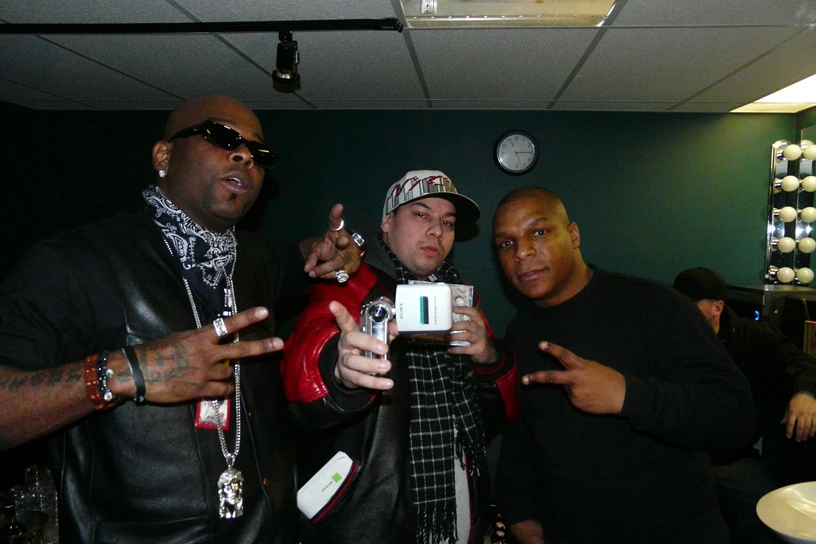
Who Is Vinnie from Naughty by Nature?

Naughty by Nature is a three-person group from East Orange, New Jersey: Treach (Anthony Criss), DJ Kay Gee (Keir Gist), and Vin Rock (Vincent Brown). When people search for 'Vinnie from Naughty by Nature,' they mean Vin Rock. His stage name is sometimes shortened to 'Vinnie' or 'Vinnie Brown' in songwriting and production credits, which is exactly how he appears on IMDb and publishing databases for songs like 'Hip Hop Hooray' and the self-titled track 'Naughty by Nature.' He is not the lead rapper (that's Treach) but he is a founding member, songwriter, and producer who appears throughout the group's creative credits going back to their 1991 debut.
One thing worth flagging upfront: when you search 'Vin net worth' or 'Vinnie net worth,' you will hit results for multiple different people. Because of that name mix-up, people also end up seeing search results tied to Popcaan’s “net worth,” even though it’s a different artist entirely Vin net worth. NetWorthSpot, for example, has a 'Vin Net Worth & Earnings (2026)' page that almost certainly refers to someone else entirely. Always confirm the full name Vincent Brown or Vin Rock to make sure you are looking at the right person.
Vin Rock's Net Worth Today: Best Estimate and Realistic Range
The most credible public estimate puts Vin Rock's net worth at approximately $1 million on the conservative end, with a realistic working range of $1 million to $3 million as of June 2026. FamousPeopleToday has published a $1 million figure, which represents a floor based on verifiable career output. The upper end of the range accounts for accumulated publishing royalties, real estate or savings that are not publicly disclosed, and any ongoing income from legacy catalog licensing. A figure above $3 million would be hard to defend without evidence of a significant independent business venture or large catalog sale, neither of which is documented in public records.
| Estimate Type | Range | Basis |
|---|---|---|
| Conservative floor | $1 million | Published estimate, documented royalty-eligible credits |
| Working estimate | $1.5 – $2 million | Career output, touring history, publishing splits |
| Optimistic ceiling | $3 million | Undisclosed assets, catalog licensing, business activity |
| Unsupported claims | $5 million+ | No documented evidence to support figures above $3M |
Where the Money Comes From: Vin Rock's Income Sources

Vin Rock's wealth has never come from a single massive solo deal. It is the product of multiple overlapping revenue streams built over three-plus decades in the music industry. Here is how those streams break down.
Music Royalties from Naughty by Nature's Catalog
Naughty by Nature's self-titled 1991 album and '19 Naughty III' (1993) were both certified platinum by the RIAA. 'O.P.P.' became one of the most recognizable hip hop singles of the early 1990s, and 'Hip Hop Hooray' was the lead single from '19 Naughty III.' Vin Rock holds writing credits on both tracks and on album cuts throughout the group's catalog, including on 'Poverty's Paradise' (1995), where he is credited as a composer on AllMusic's credit database. Writing credits translate into mechanical royalties on sales, performance royalties through PROs (ASCAP or BMI), and digital performance royalties paid through organizations like SoundExchange for streaming and internet radio. These are ongoing, recurring income streams, though the actual dollar amounts depend on contract splits negotiated at the time of release and the current streaming volume of each track.
Production Credits

Vin Rock is credited as a producer on the music video for 'O.P.P.' (1991) per IMDb, and Shazam's track credit data shows him listed as a producer on both 'O.P.P.' and 'Hip Hop Hooray.' Production credits in this era typically generated upfront fees and sometimes backend points on album sales. For a platinum-selling album in the early 1990s, backend points could translate into meaningful income over time, though exact figures are contractually private.
Touring and Live Performances
Touring has historically been one of the most reliable income sources for legacy hip hop acts. Naughty by Nature continued performing well into the 2010s and beyond, capitalizing on nostalgia-circuit bookings, festival appearances, and anniversary tours. Even mid-tier legacy bookings for a platinum act with multiple recognizable radio hits can command $20,000 to $75,000 per appearance. The 2013 incident, when Treach reportedly fired Vin Rock from the group, would have disrupted this income stream significantly. Whether Vin Rock was later reinstated or continues performing with the group in some capacity affects how much live revenue he has generated post-2013.
Media Appearances and Other Entertainment Work
Vin Rock has podcast credits and interview appearances documented on platforms like Podchaser, which suggests he participates in paid or promotional media work. These opportunities rarely produce major income individually, but they contribute to a broader public profile that supports booking rates and brand deals. Legacy artists with recognizable names in hip hop culture also sometimes generate income through licensing deals when their catalog is used in film, television, or advertising, though no specific major sync deal for Vin Rock is publicly documented.
Earnings vs. Assets vs. Obligations: The Wealth Breakdown
Net worth is not the same as annual income. For someone like Vin Rock, the calculation looks something like this: a career of accumulated royalty income and touring fees feeds into whatever cash, property, or investments he holds today, minus any financial obligations. The challenge is that we only have partial visibility into each of those buckets.
- Earnings (historical): Platinum album sales in the early 1990s generated significant upfront income, but label deals from that era typically favored the label heavily. After recouping advances and covering production costs, artists often took home less than fans assume from a platinum certification.
- Royalties (ongoing): Publishing and performance royalties from songs like 'O.P.P.' and 'Hip Hop Hooray' are still being generated. These are modest but consistent, likely in the range of tens of thousands of dollars annually rather than hundreds of thousands, given the streaming economics of legacy catalog.
- Assets (estimated): Without public property records or disclosed investments, assets are the most speculative part of the estimate. A reasonable assumption for someone with a 30-year career in a platinum-selling group is some level of real estate ownership or savings, but nothing on record confirms a large asset base.
- Obligations: Taxes, potential legal costs related to the 2013 group dispute, and normal living expenses are all unknowns. The 2013 firing incident by Treach likely introduced some level of legal or financial complication, though the outcome is not publicly documented in detail.
The old-school label economics of the early 1990s are worth understanding here. Acts signed to major labels in that era were typically operating under 360-style advance and recoupment structures where the label recouped recording costs, video costs, and promotional expenses before the artist saw royalties. This is why many artists from that generation who sold platinum records did not walk away wealthy. The real long-term wealth for artists like Vin Rock comes from publishing ownership and touring, not album sales royalties.
Why Net Worth Figures Vary So Much Across Sites
If you have already searched around, you have probably seen wildly different numbers for Vin Rock's net worth. Some sites will show $1 million, others might show $3 million or more. This is not because one site has insider information. It is because every net worth site is working from the same incomplete public data and applying different algorithms or editorial judgments to fill the gaps.
NetWorthSpot, for example, explicitly states on its methodology page that estimates are calculated from a combination of publicly available data and a proprietary algorithm. That algorithm can produce very different outputs depending on how it weights YouTube views, social media engagement, or estimated touring income. None of these sites have access to Vin Rock's bank statements, tax returns, or private contracts.
There is also the naming confusion problem. 'Vin' and 'Vinnie' are common enough names that net worth aggregators sometimes pull data from the wrong person entirely. The NetWorthSpot page titled 'Vin Net Worth & Earnings (2026)' is almost certainly not about Vin Rock from Naughty by Nature. Always verify the full name before trusting any figure you find.
- Public financial filings: not available for private individuals like Vin Rock
- Touring income: estimated from booking rates and venue capacity, not disclosed contracts
- Royalty income: estimated from chart performance and streaming data, not actual PRO or SoundExchange statements
- Assets: entirely speculative without property records or disclosed investments
- Label deal terms: the original Naughty by Nature contracts from the early 1990s are not public
How to Verify or Update the Number Yourself

If you want to do your own research and arrive at a defensible estimate, here is a practical checklist of what to actually look at.
- Check RIAA's Gold & Platinum database for Naughty by Nature certifications. Each certified release confirms commercial scale and gives you a baseline for estimating historical sales royalties.
- Search ASCAP or BMI's public performance rights databases for songwriter credits under 'Vincent Brown' or 'Vin Rock.' If he is registered, you can see which songs he holds publishing shares in.
- Look up property records in Essex County, New Jersey (where East Orange is located) and any other states where he may have lived. County assessor databases are often searchable for free online.
- Monitor entertainment news outlets and hip hop trade publications for any announcements about new Naughty by Nature tours, catalog licensing deals, or business ventures. These are signals that income is changing.
- Check IMDb and AllMusic for any new production, writing, or soundtrack credits. New credits mean new royalty streams.
- Search for podcast or media appearances on Podchaser or major podcast platforms. Paid media work and brand partnerships are sometimes disclosed in press releases.
- Watch for any social media activity from Vin Rock or Naughty by Nature's official accounts announcing new projects, tours, or business partnerships. These are the clearest public signals of new income activity.
Career Milestones That Shaped Vin Rock's Financial Trajectory
A net worth number without context is just a guess. Here is the timeline of major events that have most likely moved Vin Rock's financial picture over his career.
| Year | Milestone | Likely Financial Impact |
|---|---|---|
| 1991 | Naughty by Nature self-titled album released, 'O.P.P.' becomes a crossover hit; album goes platinum | Significant upfront advance income; begins generating publishing royalties that continue today |
| 1992 | Group transitions from 'New Style' to Naughty by Nature; label deal with Tommy Boy Records solidifies | Label advance and recording budget; recoupment terms lock in future royalty structure |
| 1993 | '19 Naughty III' released; 'Hip Hop Hooray' becomes a top-10 hit; album goes platinum | Second platinum cycle boosts publishing and performance royalty base; major touring income begins |
| 1995 | 'Poverty's Paradise' wins Grammy for Best Rap Album; Vin Rock credited as composer | Grammy win elevates booking value and catalog licensing appeal; production/writing income continues |
| Late 1990s – 2000s | Subsequent albums ('Nineteen Naughty Nine,' '0 to 40') perform below early commercial peak | Reduced new royalty generation; group relies more heavily on legacy catalog and touring income |
| 2013 | Treach reportedly fires Vin Rock from Naughty by Nature | Potential disruption to touring income share and group business arrangements; legal and financial uncertainty |
| 2015+ | Legacy touring circuit, nostalgia festival bookings, and catalog streaming | Modest but ongoing income from streaming royalties and live performance fees |
| 2020s | Streaming economics benefit catalog holders; 'O.P.P.' and 'Hip Hop Hooray' remain culturally active | Incremental royalty income from SoundExchange digital performance payments and streaming platforms |
The 2013 firing is the single most significant financial event in the recent part of Vin Rock's career trajectory. If the split reduced or eliminated his share of live touring income, that would have meaningfully lowered his annual earnings in the back half of his career. The full details of how it was resolved, and whether he continues to receive royalties from the group's activities, are not publicly documented.
Putting It All Together
Vin Rock is not a wealthy celebrity by mainstream entertainment industry standards, but he is a man who co-created a Grammy-winning, multi-platinum catalog that still earns royalties three decades later. Cabbage Ship Hop's Vin Rock interview discusses the commercial breakthrough of Naughty by Nature's “O.P.P.” and how that kind of success shaped the group's financial trajectory blank" rel="noopener noreferrer">co-created a Grammy-winning, multi-platinum catalog that still earns royalties three decades later. The $1 million to $3 million range reflects exactly that: a career defined by cultural impact rather than massive financial scale, shaped by the unfavorable label economics of his era and complicated by internal group dynamics in the 2010s. If a new Naughty by Nature reunion tour is announced, or if a major sync deal places 'O.P.P.' in a high-profile film or ad campaign, the upper end of that range becomes more defensible. Until then, the realistic estimate sits closer to $1.5 to $2 million. Fans researching hip hop wealth across generations, similar to tracking artists like Spice, Turbulence, or other artists who built long careers without mainstream commercial windfalls, will find that Vin Rock's story fits a familiar pattern: real cultural value, modest financial outcome.
FAQ
Why do I keep seeing different net worth numbers for “Vinnie from Naughty by Nature,” and how can I be sure it is the right person?
“Vin Rock” and “Vincent Brown” are the safer identifiers to use. “Vinnie Brown” and “Vin net worth” can pull in unrelated people with similar names, so when you verify, match the artist’s group affiliation with Naughty by Nature (not another act) and confirm the songwriting/production credits line up with the tracks credited in the 1991 to 1993 era.
If I want to build my own defensible net worth estimate for Vin Rock, what should I calculate first?
Use a timeline approach: estimate the value from (1) recurring catalog royalties from writing credits, (2) touring income over time, and (3) any publicly traceable assets such as property records if available in your jurisdiction. Then sanity-check against the fact that major-label “recoupment” deals in the early 1990s can delay or reduce artist payouts even after platinum certifications.
Do streaming earnings meaningfully change Vin Rock’s net worth, or is it mostly touring and older catalog income?
For a legacy act, streaming revenue usually matters but rarely dominates. Publishing and performance royalties tied to PROs and services like SoundExchange often carry more long-term weight when an artist has consistent writing credits, whereas master-label streaming royalties can be smaller depending on how rights were split at the time.
How can Vin Rock have platinum certifications but still be in the $1 million to $3 million net worth range?
RIAA platinum verifies sales milestones, but it does not tell you how the money was split. Backend points, publishing ownership, and recoupment terms determine how much an individual member actually sees. That is why a platinum-heavy catalog can still translate to a modest net worth for some artists.
What evidence would be most likely to justify Vin Rock’s net worth being closer to the high end of the estimate?
A single high-profile sync could move the upper end of the range because it can generate a combination of upfront fees and ongoing publishing income for the composition. However, without a documented major sync placement for songs like “O.P.P.” or “Hip Hop Hooray,” it is not safe to assume those earnings are already included.
Why does the 2013 incident (Treach reportedly firing Vin Rock) affect net worth estimates?
The 2013 firing matters financially because it could reduce his share of live performance revenue and any group-related payouts during the period he was not actively working. Net worth estimates that assume uninterrupted touring income could be overstating earnings if his role was actually diminished for multiple years.
What is the difference between Vin Rock’s net worth and his annual income, and why do they often get mixed up online?
Net worth is a snapshot, annual income is a flow. A person can earn well during touring years but still end up with limited net worth if spending, legal costs, taxes, or poor investment returns offset it. So you should treat estimates as “accumulated assets minus liabilities,” not as a direct translation of yearly earnings.
When verifying credits for royalties, what should I look for to confirm it is actually Vin Rock and not someone else named Vin/Vinnie?
Look specifically for reliable crediting that ties Vin Rock to the work, such as songwriting credits on the tracks and album cuts, and production credits where available. Then confirm the credit is attributed to Vincent Brown (Vin Rock) rather than a different “Vin” or “Vinnie.”
Why do net worth aggregators like NetWorthSpot and others produce different figures even when they claim to use public data?
Because many sites use proprietary models, the same input data can produce different outputs. If you see numbers that do not show a methodology, or that seem to treat social media reach as a direct proxy for income, treat them as lower-confidence. The strongest approach is to rely on rights-based income (publishing, PRO, and performance royalties) plus reasonable touring assumptions.
If Naughty by Nature announces a reunion tour, does that automatically mean Vin Rock’s net worth should rise right away?
If a reunion tour is announced, it can increase near-term cash flow quickly, but it does not instantly update net worth unless profits are retained (after taxes, costs, and any revenue shares). For a net worth estimate, you would adjust toward the high end only if there is evidence of sustained bookings or restored group participation over more than one season.