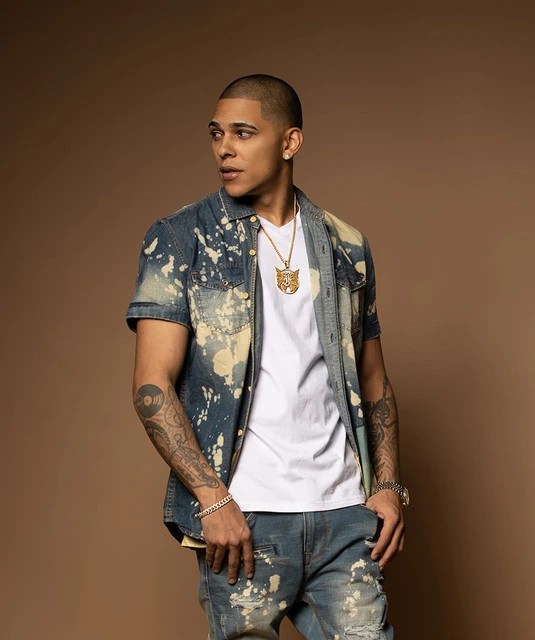
Flawless Real Talk, the New England rapper and entrepreneur whose real name is Alberto Martinez, is the specific 'Flawless' tied to Rhythm + Flow. He competed on Netflix's Season 1 of Rhythm + Flow in 2019, made it to the finals, and performed alongside Waka Flocka Flame and French Montana during the competition. The most credible estimate puts his net worth somewhere between $500,000 and $1.5 million as of mid-2026, though some sites publish wildly different numbers. Here is exactly why that range makes sense, what drives his income, and how you can pressure-test the figure yourself.
Flawless Rhythm and Flow Net Worth: Estimate Sources

Marcus Holloway
9 Jun 2026
Which Flawless, and which Rhythm & Flow?
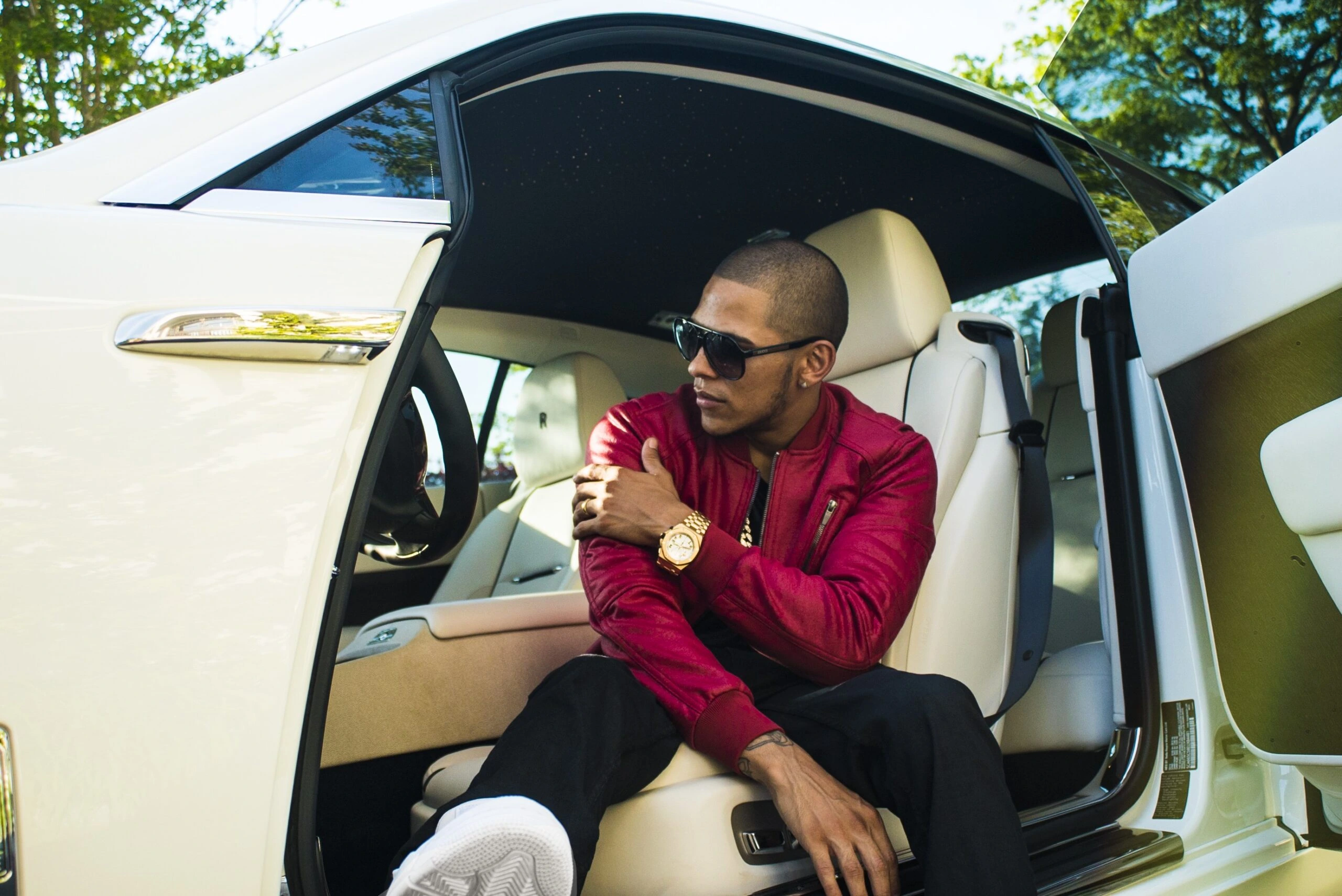
There is a bit of disambiguation worth doing here before anything else. The query 'Flawless Rhythm and Flow' almost certainly refers to Flawless Real Talk, not a group, a producer alias, or a similarly-named act. His stage name comes from a branding identity he built well before the Netflix show, and he has been publicly identified by his legal name Alberto Martinez in press materials, including a PR Newswire announcement about a content partnership with live-streaming app LIVIT.
The show he appeared on is officially titled Rhythm + Flow (not Rhythm and Flow, but the two are used interchangeably by fans and search engines). It aired on Netflix in October 2019 and was judged by Cardi B, Chance the Rapper, and T. I. Flawless did not win, but he reached the finals and gained the kind of national exposure that meaningfully changes an indie rapper's earning trajectory.
Apple Music describes him as a New England rapper, and Rhode Island Monthly ran a profile framing him as a rapper-turned-entrepreneur who launched 'We The Label' after the show. His catalog, digital footprint, and documented business moves all point to a single, consistent identity, so there is no meaningful ambiguity here. When you search for 'Flawless Rhythm and Flow,' you are looking for this guy.
The net worth estimate and how confident to be in it

The honest range for Flawless Real Talk's net worth as of June 2026 is roughly $500,000 to $1. 5 million. That sits well below the $5 million figure published by RichestLifestyle. com (last updated September 2025) and astronomically below the $83.
If you are trying to pin down Groove B Chill net worth, the key is to look for the same kind of documented income signals and avoid round-number speculation. Groovin nchabeleng net worth estimates should be approached the same way: look for documented income signals and treat big social-media-based figures as speculative $83. . 2 million figure from PeopleAi (April 2026), which is calculated from social media metrics and algorithmic signals rather than anything resembling actual financial data.
Neither of those sites publishes income worksheets, verified deal terms, or audited financials.
The $500K to $1.5M range is grounded in what we actually know: he is an independent or semi-independent artist operating out of New England with a modest but documented catalog, real live performance history, a streaming-era income model, and a handful of brand and content partnerships. He is not selling out arenas, and there is no credible evidence of a record deal advance, publishing sale, or major business exit that would push his wealth into the millions. The confidence level on this estimate is moderate at best. Without a public financial disclosure, verified deal terms, or a confirmed business valuation, any number is an informed approximation.
Music income: streaming, royalties, and publishing
Flawless Real Talk's primary music income comes from three buckets: streaming royalties, songwriting/publishing royalties, and digital sales. His main project is Every Second Matters, a 10-track album released December 20, 2019, on his own label imprint R.i.S.E. Songwriter credits documented on Shazam (for tracks like 'It's Real') show Alberto Martinez listed as a co-writer alongside Joseph Watchorn, which means he holds at least a partial share of composition publishing rights for those tracks, subject to whatever splits were negotiated. MusicBrainz also provides a work-level identifier (MBID) for the song “Real Talk,” which you can use to cross-reference related credits across databases work-level identifier (MBID) for the song “Real Talk”.
Streaming income at the indie level is modest by industry standards. For context, Spotify pays between $0. 003 and $0. 005 per stream on average.
An independent rapper with regional visibility and a Netflix appearance might realistically accumulate anywhere from a few hundred thousand to low single-digit millions of streams across a catalog, which translates to a few thousand to maybe $10,000 to $20,000 per year in streaming revenue, depending on platform mix and distribution deal terms.
His catalog on Shazam includes tracks like 'Revelation,' 'Forever Flawless,' and 'Free (Remix),' giving him a measurable body of work, though none of these appear to be chart hits that would generate outsized streaming numbers. A new track, 'Into You (feat. Asha Q'Dira),' was released April 24, 2026, showing he is still actively releasing, which keeps royalties ticking and streaming profiles active.
Publishing is potentially the most underappreciated piece here. If Flawless retained publishing rights through R.i.S.E or a self-publishing arrangement (rather than signing them over to a label or publisher), then synchronization licensing, playlist placements, and any use of his music in media could generate income streams beyond the obvious streaming numbers. The Netflix show itself, for example, may have triggered sync licensing discussions for any original music featured. That said, there is no publicly documented publishing deal or sync placement that can be confirmed, so this remains speculative.
Other income streams: touring, features, partnerships, and appearances
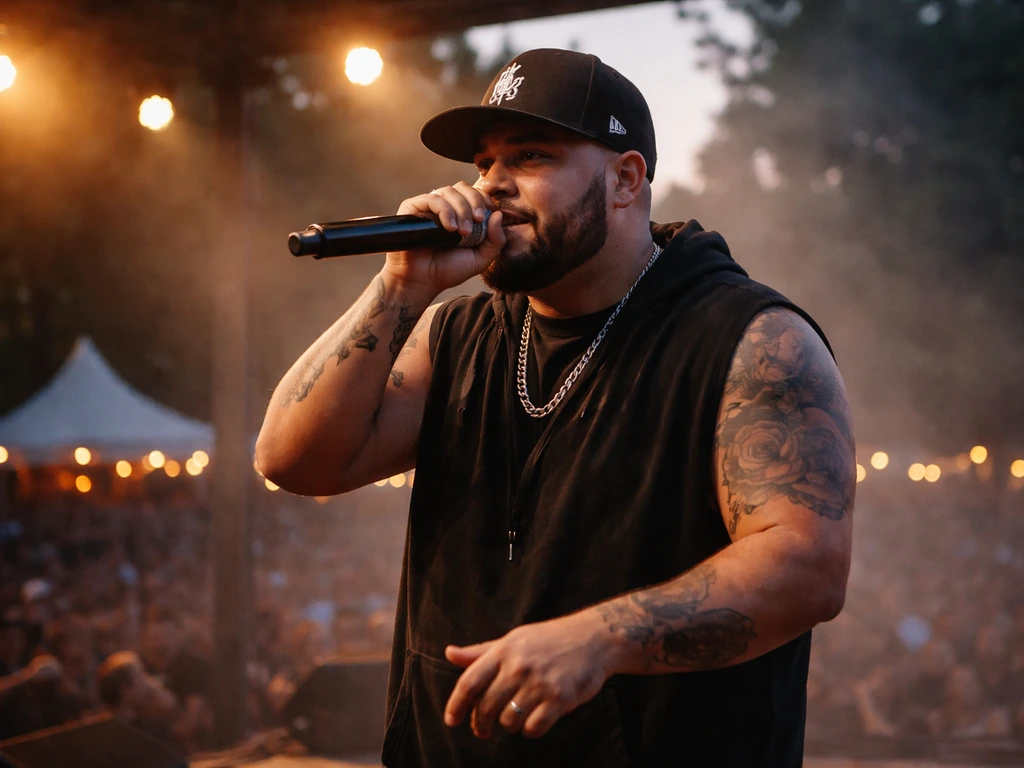
Live performance is a real income driver for Flawless. He performed at the FirstWorks Summer Beats Concert Series at Roger Williams Park in Providence on July 24, 2022, per ABC6 reporting. Regional and mid-tier festival appearances like this typically pay between $1,000 and $10,000 per show for artists at his level of visibility, depending on the promoter and funding source. It is not tour-bus-and-crew money, but consistent regional gigging adds up over a year.
The most concrete documented non-music income is the LIVIT partnership, announced via PR Newswire in October 2020. The deal was described as an exclusive streaming and content creation partnership with the global live-streaming platform. AllHipHop also covered it as a post-Rhythm + Flow business move. AllHipHop’s interview on the partnership with LIVIT also frames it as a post-Rhythm + Flow visibility and momentum driver for Flawless Real Talk’s income beyond recorded music post-Rhythm + Flow business move. These kinds of creator partnerships with streaming apps often include revenue sharing on live-stream earnings, promotional fees, or upfront appearance guarantees. The exact terms were not disclosed, but this is a real income stream that many net-worth calculators miss entirely.
Rhode Island Monthly's profile noted his involvement with 'We The Label,' which positions him as an entrepreneur with potential income from artist development, management fees, or label operations, not just performance royalties. This is the same playbook a lot of post-reality-show artists run: use the visibility spike to build infrastructure rather than just chase features. Whether We The Label is generating meaningful revenue is unclear from public sources, but it represents a real business asset.
- Regional live performances and concert series appearances (documented in Providence, RI)
- LIVIT live-streaming content partnership (announced October 2020, terms undisclosed)
- Feature verses and collaborations with other artists
- We The Label entrepreneurial venture (artist development and label operations)
- Possible brand endorsements or social media promotional income (no specific deals confirmed)
How the show and releases shifted his earning trajectory
The Rhythm + Flow appearance in October 2019 is the clearest inflection point in Flawless Real Talk's financial timeline. Before the show, he was a regional New England rapper with a fanbase, signed or affiliated with Strange Music Inc. in earlier years based on interview coverage. After the show, his profile expanded nationally, and the downstream effects were measurable: he released Every Second Matters in December 2019 (essentially capitalizing immediately on the visibility spike), landed the LIVIT partnership in 2020, and continued releasing music through 2022 and beyond.
| Period | Key Event | Estimated Impact on Earnings |
|---|---|---|
| Pre-2019 | Regional indie rapper, Strange Music affiliation | Low: regional gig income, limited streaming catalog |
| Oct 2019 | Rhythm + Flow Season 1 finalist | Spike: national exposure, follower/stream growth |
| Dec 2019 | Every Second Matters album release | Moderate: catalog revenue, streaming royalties begin accumulating |
| Oct 2020 | LIVIT exclusive streaming partnership | New revenue stream: content creation and live-stream earnings |
| 2022 | Roger Williams Park concert, continued releases | Sustained: live income + catalog royalties |
| 2025–2026 | Active releasing (Into You, Apr 2026) | Ongoing: streaming income, publishing accumulation |
The trajectory here looks like what many Rhythm + Flow contestants experienced: a real but bounded visibility boost that translated into incremental rather than transformational wealth growth. Winning the show (which D Smoke did) provided a larger platform and label resources. Finishing as a finalist gave Flawless enough momentum to build an independent business around music, but without a major label advance or viral breakout single, his wealth growth has likely been steady rather than explosive. These estimates also help explain why you will see claims about a mellow and sleazy net worth rather than hard, verifiable figures. This is the honest context for any net-worth estimate.
How to verify or update this net worth yourself

If you want to pressure-test or update this estimate over time, there are specific signals worth tracking. None of these give you an audited number, but together they paint a useful picture.
- Streaming data: Check Spotify for Artists profile mentions in music press, or use third-party trackers like Chartmetric or Soundcharts to see stream counts across platforms. Sustained growth in monthly listeners indicates royalty income growth.
- New release activity: Track his discography on Apple Music, Shazam, and MusicBrainz for new releases. Each release restarts the royalty clock and signals continued investment in music income.
- Live performance announcements: Follow local Providence/New England event listings and his social media for show announcements. More frequent bookings at larger venues means higher performance fees.
- Business press: Search PR Newswire, AllHipHop, and Rhode Island Monthly for new partnership or entrepreneurial announcements tied to his name or Alberto Martinez.
- Interviews: Podcast appearances (like the TRAPITAL episode that profiled him) often contain candid financial context, including label deal status, distribution arrangements, and income philosophy.
- Publishing and sync: Check ASCAP or BMI's public repertory search for Alberto Martinez or Flawless Real Talk to see registered works, which gives a floor for publishing income exposure.
Why net worth numbers vary so much across websites
The spread between $500,000 and $83 million across different sites is not a rounding error. It reflects fundamentally different methodologies, and most of them are not transparent about what they are actually measuring. Here is the breakdown of why these numbers diverge so dramatically.
| Source Type | Methodology | Reliability |
|---|---|---|
| AI/social metric sites (e.g., PeopleAi) | Algorithmic estimates based on follower counts, engagement rates, and social reach | Very low: conflates influence with wealth |
| General celebrity net worth sites (e.g., RichestLifestyle.com) | Aggregated estimates, often copied or lightly edited across sites without primary sourcing | Low to moderate: no verified financial data |
| Music-specific trackers (e.g., RichestRapper.com) | Partially researched but still estimate-based, varying quality | Moderate: better framing, still not audited |
| Stream trackers (e.g., Starstat.yt) | Derives income from estimated stream counts and ad rates | Low to moderate: useful for streaming floor estimates only |
| Primary sources (interviews, press releases, public filings) | Direct statements from the artist or verified business announcements | High: closest to ground truth available |
The core problem is that net worth for independent artists like Flawless Real Talk is genuinely private. He is not a publicly traded company. He does not file income disclosures. His label R.
i. S. E is not required to publish financials. So every third-party site is working from incomplete data and filling gaps with assumptions.
When a site shows $83 million, it almost certainly weighted social media reach heavily, which inflates figures for anyone with decent follower counts regardless of actual earnings. When a site shows $5 million, it may be backward-engineering from comparable artists or simply publishing a round number that sounds plausible. The range I use ($500K to $1. 5M) is grounded in what independent rapper economics actually look like at his career stage, cross-referenced against documented income events.
It is also worth noting that this kind of estimation challenge is not unique to Flawless Real Talk. Artists in the same orbit, including other Rhythm + Flow contestants and contemporaries in the independent hip-hop space, face the same opacity. The same methodology gaps apply to tracking wealth for artists like Flawless Real Talk's show castmates or similarly-positioned indie rappers who built post-show careers without major label infrastructure. The absence of transparent financial reporting makes every number on every site a best guess, not a fact.
FAQ
How can I verify whether the “Flawless Rhythm and Flow” person is really Flawless Real Talk (Alberto Martinez)?
Start with identity cross-checks that are hard to fake: look for the legal name Alberto Martinez in press releases, match the Instagram or website links to the same discography titles, and confirm the credits on the specific album (Every Second Matters) and the same songwriting names on databases like Shazam. If a claim about net worth cannot tie back to these identifiers, treat it as unreliable.
Do streaming royalties usually account for most of his net worth, or are other income sources more significant?
At his likely scale, live appearances and brand or content partnerships can be a bigger driver than people assume, especially for indie artists. Streaming royalties tend to be steady but small unless a track goes viral, gets playlist traction at scale, or lands in sync placements. So you get a more realistic picture by weighting “gigs plus partnerships” alongside streaming, not by assuming streaming is the main engine.
What would need to happen for his net worth to plausibly reach the high end of the $1.5M range?
The most plausible ways are either consistently high streaming volumes across multiple years, a strong publishing position (retaining composition rights and earning from placements), or recurring performance volume at paid venues and festivals. A one-off viral hit is less likely than sustained performance and catalog monetization, plus any undisclosed but repeatable creator-platform deals.
Why do some sites show wildly high numbers like $5M or $83M, even though they can’t show deal terms?
Those sites often rely on non-financial proxies, such as follower counts, engagement, and generalized “influence to earnings” formulas. That can inflate numbers for artists who are visible online but do not convert that reach into record-breaking sales, paid tours, or verified partnership guarantees. Without documents (deal terms, royalty statements, audited valuation), treat those figures as modeling guesses, not measurements.
Is a self-owned label (R.i.S.E) enough to guarantee higher net worth?
Not by itself. Owning a label can help, but it only translates into wealth if the label has ongoing revenue streams after costs (marketing, distribution, admin) and if the artist keeps a meaningful share of publishing or master income. If most output is self-funded or operates at low margins, the label becomes a platform rather than a profit center.
How can I pressure-test the estimate using “signals” without relying on net worth calculators?
Track three things over time: (1) release cadence and whether new music appears on platforms consistently, (2) evidence of paid appearances (festival lineups, event press, promoter listings) rather than just reposts, and (3) identifiable partnerships with disclosed scope (exclusive content, creator campaigns). If these signals remain modest for multiple years, the lower half of the range becomes more likely.
Could songwriting and publishing rights be the hidden factor that changes the estimate?
Yes, but only if rights retention is real and documentation shows active publishing collection. The strongest indicator is whether he is credited as a co-writer and appears to retain a share of composition rights rather than signing them away. Even then, without evidence of sync placements or active licensing, publishing can still underperform compared with live and direct brand deals.
Does a Netflix competition appearance automatically mean big money afterward?
It can increase visibility, but it does not automatically produce major-label advances, large advances, or guaranteed high royalty income. In many cases, the real effect is opportunity creation (new offers, more gigs, partnerships), not immediate wealth jumps. You should look for tangible follow-through, like releases timed to the publicity window and subsequent business deals.
How should I treat claims that he was signed to a label like Strange Music Inc. earlier in his career?
Treat it as a context clue, not a net worth proof. Signing can mean many different relationships (distribution only, feature/branding arrangement, or short-term affiliation). Without a publicly described contract structure (advance amount, master ownership terms, royalty split), you cannot reliably convert “affiliation” into a wealth number.
What’s the most common mistake people make when estimating an indie rapper’s net worth?
They overweight social media reach and underweight documented monetization. Another common error is assuming streaming revenue alone can explain large net worth claims. A better approach is to separate steady revenue (catalog streaming, small royalty checks) from episodic revenue (paid shows, sponsorship or platform partnerships) and then consider the likelihood of rights retention for publishing.