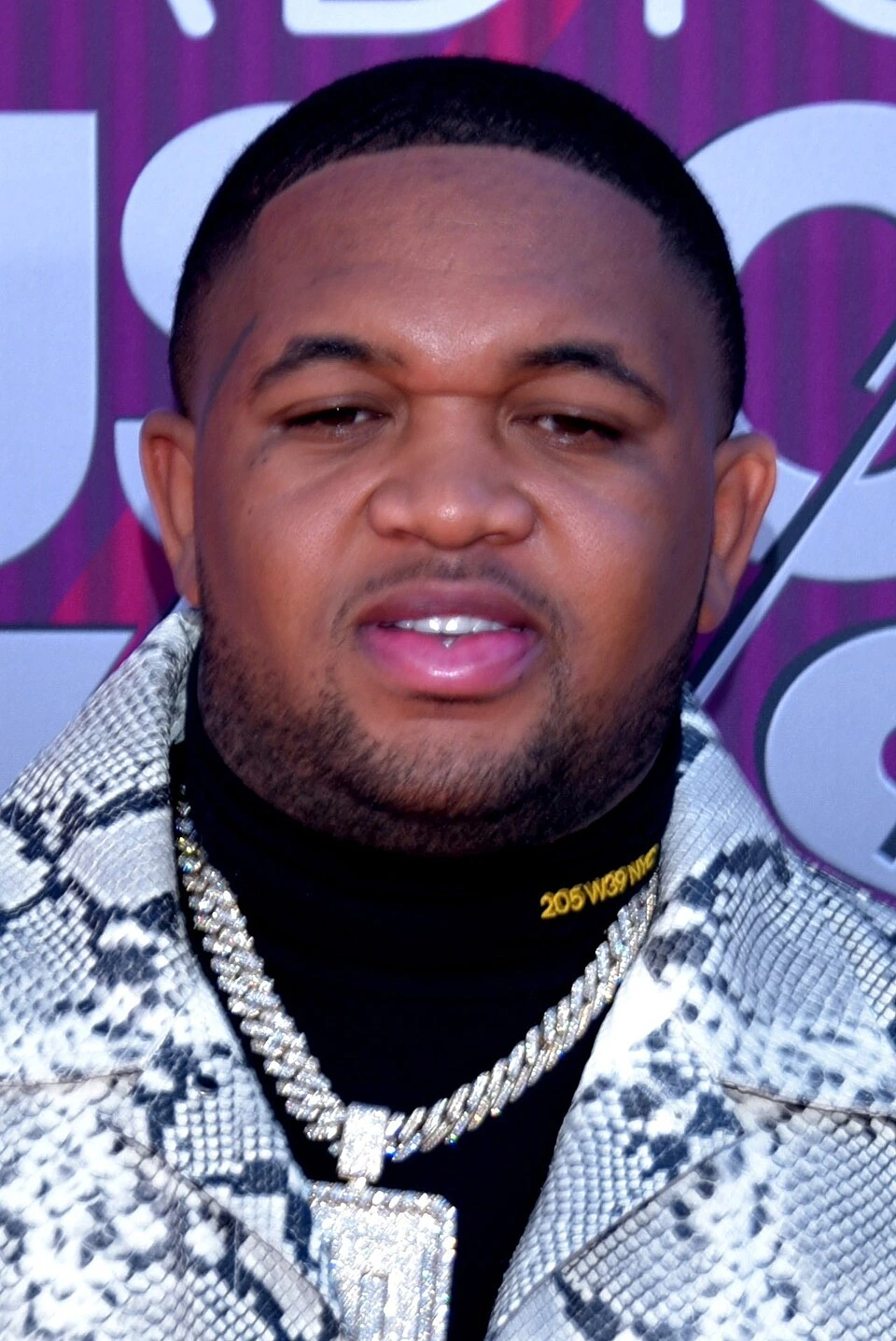
Buddah Bless this beat is the producer tag of Tyron Buddah Douglas Sr., a Sony/ATV-signed Atlanta beatmaker whose real name and alias have been confirmed across Wikipedia, Pulse Music Group, MusicBrainz, and Apple Music. His estimated net worth sits in the $1 million to $3 million range as of 2026, driven almost entirely by production royalties, publishing income, and placement fees from a catalog that includes platinum-level records with Travis Scott, 2 Chainz, Migos, Chris Brown, and YoungBoy Never Broke Again. That range is an honest estimate, not a hard number, and this article breaks down exactly why.
Buddah Bless This Beat Net Worth: How Much and Why Estimates Vary

Marcus Holloway
6 Jun 2026

Who Buddah Bless This Beat Actually Is
Buddah Bless was born Tyron Buddah Douglas Sr. on February 8, 1992. He has been active since 2011, and his producer tag, the phrase "Buddah Bless this beat," is one of the more recognizable drops in trap music. Complex included it on their list of the best hip-hop producer tags, and HotNewHipHop named him among the buzzing producers fans should know, which gives you a sense of where his profile sits: credibly respected in industry circles, not quite household-name famous.
His management is handled through Pulse Music Group, which lists him under their roster with an extensive credit sheet. Image-Line, the company behind FL Studio, features him as a Power User on their official artist page, confirming he builds beats natively in FL Studio. His Sony/ATV publishing deal, confirmed by a PR.com press release referencing Sony/ATV executive Ian Holder signing him, is one of the most significant financial anchors in his career because it means his compositions are administered by one of the largest music publishers in the world.
His production credits cover some genuinely big moments: "Big Amount" by 2 Chainz featuring Drake, "OUT WEST" by JACKBOYS and Travis Scott featuring Young Thug (which charted in 2020), "Call Casting" by Migos, "Heat" by Chris Brown featuring Gunna, "Make No Sense" by YoungBoy Never Broke Again, and "Shots Fired" by Megan Thee Stallion. These are not obscure cuts. They represent real streaming numbers and real publishing income.
Why Net Worth Estimates for Producers Are Always a Range

Producers occupy a peculiar spot in the wealth conversation. Unlike rappers who headline tours or executives with equity in labels, a beatmaker's income is mostly invisible to the public. There are no tour gross receipts filed publicly, no IPO disclosures, and no earnings calls. What you can find are publishing registrations, PRO databases, and the occasional interview. That's why any honest net worth figure for a producer is a range, not a precise number.
Net worth also gets confused with income and revenue, which are three different things. Revenue is the gross money flowing in before any expenses. Income is what's left after paying managers, lawyers, engineers, and studio costs. Net worth is the accumulated value of assets minus liabilities, which means it compounds over time if the producer invests or holds publishing rights. For a beatmaker like Buddah Bless, the gap between "what he made on a placement" and "what he actually has" can be significant depending on his deal structures, publishing splits, and spending habits, none of which are public.
Where the Money Actually Comes From
Producer income stacks up from several distinct channels, and understanding each one helps you size the estimate more accurately.
Beat Placement Fees

When a major-label artist uses a producer's beat, the producer typically receives an upfront placement fee. For an established producer with a Sony/ATV deal and credits on platinum tracks, these fees can range from $10,000 to $75,000 or more per placement depending on the artist's tier and the label's budget. Buddah Bless has placements with Travis Scott and Drake-featured records, which sit at the top of that tier. Even conservative estimates across his catalog suggest significant upfront placement income over his career.
Publishing and Performance Royalties
This is the long-term engine. Every time a song is streamed, performed on radio, or played on TV, the songwriter and publisher split performance royalties through a PRO like ASCAP, BMI, or SESAC. Buddah Bless is registered with BMI, which is confirmed by his credit on Migos' "Call Casting" via Vagalume's songwriter data. His compositions are administered by Sony/ATV (now Sony Music Publishing), which collects mechanical royalties, sync fees, and sub-publishing revenue globally on his behalf.
The standard split is 50 percent to the songwriter and 50 percent to the publisher, though producers sometimes negotiate more favorable splits depending on their leverage. Royalti. io explains that streaming payouts can be modeled with [royalty splits](https://www. royalti.
io/2026/02/label-owners-guide-royalty-splits) such as points or percentages, and that streaming revenue flows through split structures involving label, artist, and producer.
SoundExchange, the separate organization that handles digital performance royalties for sound recordings (not compositions), distributed over $1 billion in gross royalties in 2024 alone. Producers with credits on heavily streamed tracks receive a share of this pool proportional to streams, though the actual per-stream rates and split percentages are determined by individual recording contracts.
Streaming Royalties from Lead-Artist Releases
Buddah Bless also releases music under his own name. His Apple Music page shows his most recent project, "Buddah Bless The Streets," dropped on February 13, 2026, along with 2025 singles like "See The World" featuring Bossman Dlow, Big Sean, and 2 Chainz, and "Owe Me." These releases generate direct streaming royalties where he retains a larger share than he would as a credited producer on someone else's record.
Sync Licensing
Sync deals, where a composition is licensed for use in film, TV, commercials, or video games, are negotiated separately from PRO royalties and can be highly lucrative. A single sync placement in a major TV show or movie trailer can generate anywhere from $10,000 to several hundred thousand dollars depending on the usage. With a Sony Music Publishing deal backing his catalog, Buddah Bless has access to the infrastructure to pursue these placements aggressively.
Other Income Streams

Beyond the core production economy, producers at his level sometimes earn from brand partnerships, producer masterclasses or tutorials (especially relevant given his FL Studio Power User status), and live appearances or DJ sets. These are harder to quantify without direct disclosure but are realistic income contributors for a producer with his profile.
| Income Source | Estimated Contribution | Predictability |
|---|---|---|
| Beat placement fees | High per placement, variable volume | Low (deal-by-deal) |
| Publishing/performance royalties (BMI/Sony) | Steady, catalog-driven | Medium-High |
| SoundExchange digital performance royalties | Stream-volume dependent | Medium |
| Lead-artist streaming releases | Growing with catalog | Medium |
| Sync licensing | High ceiling, infrequent | Low |
| FL Studio tutorials/appearances | Modest supplemental | Low |
How to Estimate and Verify a Producer's Net Worth
No single database publishes a producer's net worth. The methodology used on sites like this one involves triangulating across multiple credible data points and being transparent about what's an estimate. Here's what actually goes into building a defensible range for someone like Buddah Bless.
- Catalog size and placement tier: Count verifiable credits on charting or commercially significant tracks. For Buddah Bless, this includes at least six confirmed major placements across Migos, Travis Scott, Chris Brown, 2 Chainz, YoungBoy Never Broke Again, and Megan Thee Stallion.
- PRO and publishing registrations: BMI and ASCAP databases are publicly searchable and can confirm which compositions are registered under his name, which is a proxy for royalty eligibility.
- Label and publishing deal context: A Sony Music Publishing deal signals professional-grade income infrastructure. These deals often include advances (typically recoupable) and long-term admin rights.
- Public interview statements: The Hip Hop Museum's August 2025 interview with Buddah Bless is the kind of source worth mining for any direct references to career milestones or financial context.
- Release cadence and streaming data: Apple Music's listing of his 2026 and 2025 releases, combined with estimated streaming figures on platforms like Spotify, can help bound royalty income from his own catalog.
- Cross-referencing with comparable producers: Producers with similar placement profiles and deal structures, like those covered in related profiles on Murda Beatz or Mustard on the Beat, provide useful comp anchors for estimating where Buddah Bless might land on the wealth spectrum.
The Current Net Worth Estimate and What Drives It
Based on all available signals, the most defensible estimate for Buddah Bless's net worth as of mid-2026 is between $1 million and $3 million. The lower bound reflects conservative assumptions about publishing splits, recouped advances, and a catalog that, while impressive, is not at the scale of producers like Metro Boomin or Murda Beatz. The upper bound reflects the compounding value of a Sony Music Publishing deal, recurring royalties from platinum-adjacent placements, and a growing lead-artist catalog that adds direct streaming income on top of placement earnings.
What pushes the number toward the higher end of that range is the quality of placements rather than sheer volume. "OUT WEST" is a certified hit with massive streaming numbers. "Big Amount" features Drake, meaning it carries royalty longevity that most tracks don't. These are catalog assets that continue generating income years after release. The February 2026 album release also signals continued career investment, which typically means continued royalty inflow rather than a stalled catalog.
What keeps the estimate from going higher is the reality that most producers at this tier are not independently wealthy in the way that artist-entrepreneurs are. If you're specifically searching for mustard on the beat net worth, treat it the same way as any producer figure here, as an estimate based on placements, royalties, and deal structure. Publishing advances are recoupable, management and legal fees eat into placement fees, and unless a producer owns significant equity in a label or publishing company, their accumulated wealth grows steadily rather than exponentially. Without a disclosed business stake or investment portfolio, the catalog-driven model has a natural ceiling.
Name Mix-Ups to Watch Out For
The phrase "Buddah Bless this beat" functions as a producer tag, and that creates some real disambiguation headaches. Here are the most common points of confusion.
- Spelling variants: The name appears as Buddah Bless, Budda Bless, Budda Beats, and Buddah, all confirmed aliases for the same person, Tyron Buddah Douglas Sr. If you are searching databases, try multiple spellings.
- Producer tag vs. artist name: "Buddah Bless this beat" is the audio drop heard at the start of his produced tracks, similar to how "It's a Banger" identifies Murda Beatz. Some readers search for the tag phrase as if it is a separate person. It is not. It all points back to the same producer.
- Different artists on streaming platforms: Apple Music shows at least one other artist page that may surface under the Buddah Bless name. Always cross-reference with the Tyron Buddah Douglas identity and the Pulse Music Group roster to confirm you are looking at the right profile.
- Confusion with similarly named figures: There is no well-known rapper named Buddah Bless who should be confused with the producer. However, searches can occasionally pull up unrelated artists with Buddhist or blessing-adjacent names. The real Buddah Bless is Atlanta-based, FL Studio-powered, and Sony-published.
- Credit attribution errors: On some track credits, he appears as Tyron Douglas, Tyron Buddah Douglas, or Budda. MusicBrainz and Album of the Year both catalog these variants, which is useful when verifying credits in royalty or publishing databases.
How to Track Updates and Read the Number Over Time
Net worth for a working producer is not a static number. It moves with new placements, new releases, streaming growth on existing catalog, and shifts in publishing deal terms. Here's how to stay current and interpret what you're seeing.
The most reliable update signals are new release announcements ("Buddah Bless The Streets" in February 2026 is the most recent example), new production credits appearing on charting records, and any interview or profile that surfaces in outlets like The Hip Hop Museum, HotNewHipHop, or Complex. The Hip Hop Museum published an in-depth interview with him as recently as August 2025, which is exactly the kind of source that sometimes contains direct career milestones worth tracking.
SoundExchange publishes quarterly and annual royalty distribution data, and while you can't isolate one producer's earnings from that, the aggregate figures give you a sense of whether the digital royalty pool is growing or contracting. In 2024, SoundExchange distributed over $1 billion in gross royalties. Understanding that context helps you calibrate whether a producer's digital income estimate is realistic.
When you see a net worth figure for Buddah Bless or any producer, ask three questions: Is this net worth (accumulated assets minus liabilities), or is it income (annual earnings), or is it revenue (gross before expenses)? These numbers can differ dramatically. A producer who generated $500,000 in placement fees last year might still have a net worth below $1 million if they have outstanding advances to recoup or significant business expenses. Always read the methodology behind the number, not just the number itself. To understand the claim behind a specific “sez on the beat net worth” figure, you still need to check whether the source is estimating net worth or just reporting annual income.
For comparative context, producers like Murda Beatz and Mustard have had their own net worth profiles analyzed on this site, and comparing Buddah Bless's placement tier and catalog depth against those profiles gives you a useful framework for where he sits on the broader producer wealth spectrum. For reference, you can also compare his net worth estimate to Murda Beatz net worth figures to see how different catalogs and deal structures affect producer wealth. He is clearly above the independent-beatmaker baseline but has not yet crossed into the equity-and-ownership territory that pushes top-tier producers into the tens of millions. If you are specifically looking for sez on the beat net worth, use these placement, publishing, and streaming drivers to interpret any numbers you see.
If you want to monitor his net worth trajectory going forward, the practical approach is simple: watch for new major placement credits (especially with artists in the top streaming tier), track whether his lead-artist releases gain traction on streaming platforms, and note any announcements about publishing deal renewals, label partnerships, or business ventures. Those are the events that actually move the needle on a producer's long-term wealth, and for Buddah Bless, the trajectory as of 2026 points upward.
FAQ
Is Buddah Bless this beat net worth the same thing as how much he makes per song or per year?
Not really. “Net worth” refers to accumulated assets minus liabilities, while “income” is what comes in over a year. For producers, net worth can look flat even during a banner placement year if money is largely recouping advances or paying ongoing studio, legal, and management costs.
Can I use public royalty databases to calculate the exact amount Buddah Bless earns?
Usually you cannot. A single royalty statement typically groups rights by songwriter, publisher, and recording owner, and it may not publicly attribute amounts to one producer tag. Even when you see performance royalty distributions from PRO or SoundExchange, the producer’s exact share depends on contract splits and ownership shares that are not public.
Do streaming numbers translate directly into higher royalties for Buddah Bless, or is there a delay and uncertainty?
Assuming he is a songwriter and that his compositions are properly registered, streaming growth can increase performance royalties over time, but the boost may lag months behind the track release due to reporting and distribution cycles. Also, his cut depends on whether he owns publishing share, whether a co-writer exists, and whether his publisher administers at a fixed split.
Why can two producers with similar placements have very different net worth estimates?
Yes, but it is deal-specific. Producers may negotiate higher songwriter shares, different mechanical split structures, or partial control of catalogs. If he has less favorable terms on certain older placements, later hits might not raise net worth as much as expected until the contract structure improves or his lead-artist catalog grows.
Does hearing “Buddah Bless this beat” on a track automatically mean he earns the main royalties from that song?
A producer tag can be reused across many beats, but it does not automatically mean the tagged producer owns the underlying composition or recording rights for each track. Tag licensing and beat sales are separate from songwriting and publishing royalties, so you cannot equate “heard the tag” with “gets paid the biggest royalty share.”
How do Buddah Bless’s own releases differ from credited production work in terms of earnings and net worth?
Lead-artist releases can change the math. When he releases under his own name, he may earn a larger share of streaming revenue because he is positioned as an artist with more direct rights, though publishers and collaborators still take portions. The net effect depends on whether he also produced the beats, wrote the lyrics, and controls the master and publishing shares.
Are sync placements a reliable way to estimate his net worth, or are they too unpredictable?
Sync revenue is often lumpy, but contracts vary. A “big” placement might still be modest if the usage is short, the territory is limited, or if the deal is structured with work-for-hire or lower publishing control. For net worth, repeated sync wins over time usually matter more than one-off placements unless the deal grants long-term rights.
What are the biggest mistakes people make when reading Buddah Bless net worth estimates?
Yes, and it is a common mistake. If a site treats a listed “asset” figure as net worth without subtracting liabilities, or it conflates gross earnings with accumulated wealth, the estimate can be inflated. The safest approach is to prefer ranges and look for whether the methodology distinguishes income, revenue, and accumulated net assets.
What clues should I prioritize if I want to judge whether a new net worth claim is credible?
Assume uncertainty is highest when the estimate relies on social signals or guesses about “lifestyle.” For producers, the most meaningful drivers that can shift estimates are new top-tier placement credits, publishing deal changes, and growth of his own releases, because those directly affect royalties and ownership value over time.