
Sez on the Beat (real name Sajeel Kapoor) has an estimated net worth in the range of $500,000 to $1. 5 million as of mid-2026. That range reflects what can be reasonably inferred from his production credits, streaming royalties, beat licensing activity, and his profile as one of the most prominent hip hop producers to emerge from India. It is not a number pulled from a verified financial filing, because those don't exist publicly for independent producers at his level.
Sez on the Beat Net Worth: How It’s Calculated and Verified

Marcus Holloway
25 Jun 2026
But it's a defensible estimate built from how producers at his career stage and output level typically earn and accumulate wealth. If you are also searching for buddah bless this beat net worth, this kind of methodology is how those ranges are usually estimated for independent producers.
Who Sez on the Beat actually is (and clearing up the name confusion)

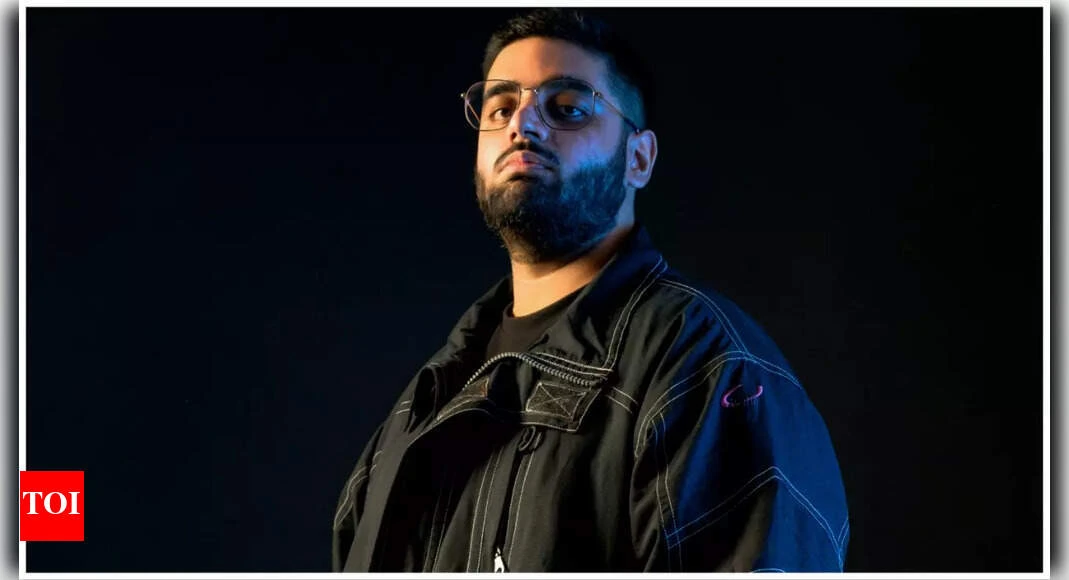
Sez on the Beat is the stage name of Sajeel Kapoor, an Indian hip hop producer and beatmaker. He's been widely profiled in mainstream Indian press including the Hindustan Times and The Indian Express, both of which identify him explicitly as Sajeel Kapoor, aka Sez on the Beat. He also maintains a BeatStars storefront under the handle stunnahsez23, which is one of the clearest public identifiers tying the producer alias to a specific commercial presence.
The name confusion worth flagging: there are a handful of producers globally who use variations of 'Sez' or 'Sez on the Beat' in their handles, which can muddy search results and cross-contaminate net worth estimates on aggregator sites. If you're researching his credits or royalties, always blank" rel="noopener noreferrer">cross-reference the Sajeel Kapoor name and the Indian hip hop context to make sure you're looking at the right person.
This matters especially when checking royalty databases or beat licensing platforms, where similar aliases can point to completely different artists. Other producers in this space, like Murda Beatz or Mustard on the Beat, have much clearer public footprints simply because of their longer time in the U. S. market, which makes disambiguation easier.
For Sez, the Sajeel Kapoor identifier is your anchor.
What 'net worth' really means for a hip hop producer
For a producer, net worth is total assets minus total liabilities. Simple in theory, genuinely messy in practice. A producer's assets typically include cash, royalty catalog value, equipment, real estate (if any), and equity in any business ventures. Liabilities are debts, outstanding advances, and business costs. The tricky part is that most of a producer's real wealth lives in their catalog, and catalog value is not a fixed number. It depends on streaming volumes, sync placement activity, and whether anyone has bought or licensed the rights.
Net worth estimates for independent producers are usually built by triangulating a few signals: how many high-profile tracks they've produced, what the going rate for those production credits is, how much streaming generates in publishing royalties, whether they've had sync placements in film or TV, and what any supplementary income sources (beat sales, brand deals, YouTube) contribute. None of these are publicly disclosed by the artist, so every estimate carries a margin of error. When you see wildly different numbers across websites, it usually comes down to which income streams the estimator included, and whether they accounted for the difference between revenue (gross money coming in) and net worth (what's actually accumulated after expenses).
The current net worth estimate: what the evidence supports

Working through what's publicly knowable about Sez on the Beat's career, a net worth range of $500,000 to $1. 5 million is the most defensible estimate as of June 2026. If you are trying to translate this kind of income breakdown into real-life numbers, you can also compare it against the broader discussion of dp beats net worth to see how those assumptions tend to play out net worth estimates.
The lower end of that range reflects a conservative read where most income is catalog royalties and beat licensing without major asset accumulation. The upper end accounts for the possibility of catalog appreciation, business equity, real estate, or brand partnerships that haven't been publicly documented but are plausible given his profile and activity level.
It's worth being direct about the ceiling here. Sez on the Beat is a genuinely successful and respected producer within the Indian hip hop scene, but he hasn't (as of this writing) broken through to the level of U.S.-market hitmakers who command six-figure per-track placements with major-label artists. That limits the upper bound of the estimate. The Indian streaming market also pays lower per-stream rates than the U.S. or UK markets, which compresses royalty income relative to comparable career output in those territories. These structural factors matter when assessing where his wealth actually sits.
Where the money comes from: Sez on the Beat's income streams
Production credits and upfront fees
The most direct income for any producer is the upfront fee charged per track. For established Indian hip hop producers working with well-known artists, these fees can range from a few thousand dollars to tens of thousands per placement depending on the artist's profile and the label's budget. Sez has production credits with prominent names in Indian hip hop, and those placements represent a recurring revenue stream that has compounded over a career spanning roughly a decade.
Publishing royalties and performance rights

Publishing is where producers build long-term wealth. Every time a track Sez produced gets streamed, played on radio, or performed live, performance royalties flow to the rights holders. ASCAP describes itself as a [performance-rights organization in the United States](https://www. ascap.
com/). If Sez holds the producer's share of the composition copyright (which varies deal by deal), those royalties accumulate over the lifetime of the catalog. In India, the Indian Performing Right Society (IPRS) administers performing rights, while international performance income may flow through ASCAP, BMI, or PRS for Music depending on how his publishing is registered. Tracking these registrations is one of the cleaner ways to verify credit claims.
BMI is a U. S.
performance-rights organization, and searching registered works with BMI can help verify performance and publishing credit claims.
Beat licensing via BeatStars and direct sales
Sez maintains an active BeatStars storefront, which means he licenses beats directly to artists and content creators. BeatStars beats typically sell for anywhere from $20 for a non-exclusive lease to several hundred or even thousands of dollars for exclusive rights. Top producers on the platform generate meaningful supplementary income, though it rarely replaces the value of major placement royalties. For producers building an audience, it's also a marketing channel that generates catalog visibility.
Streaming income
Tracks Sez has produced accumulate streaming revenue on Spotify, Apple Music, YouTube Music, JioSaavn, and similar platforms. Producer royalties from streaming are paid via the master recording side (mechanical royalties) and the composition side (performance and mechanical royalties). The per-stream rates on Indian DSPs are substantially lower than Western platforms, which is an honest constraint on how much streaming contributes to his total income relative to a comparable producer working primarily in the U.S. market.
Sync licensing and placements
Sync deals, placing music in films, TV shows, ads, and digital content, are one of the highest-value income sources available to producers. A single sync placement in a major production can generate more income than months of streaming. For Sez, sync activity within Bollywood-adjacent content and Indian streaming originals is plausible given his profile, though specific confirmed placements aren't extensively documented in public sources. This is an area where his actual income could differ significantly from what's estimable from the outside.
Brand partnerships and social monetization
Producers with a strong social media presence can monetize through brand deals, YouTube AdSense, and sponsored content. Sez has maintained a public-facing persona through interviews and media appearances, which builds the audience base that makes brand partnerships viable. These income streams are the hardest to estimate from the outside but contribute to overall financial picture for producers who actively cultivate them.
What can be confirmed vs. what's inferred
| Asset or Income Source | Verifiable? | Notes |
|---|---|---|
| Production credits on released tracks | Partially | Traceable via MusicBrainz, streaming platform credits, press coverage |
| BeatStars storefront activity | Yes (existence) | Storefront at stunnahsez23.beatstars.com is publicly accessible; revenue is not disclosed |
| Publishing/royalty registrations | Partially | IPRS, ASCAP, BMI, or PRS registrations can be searched; full royalty income is private |
| Streaming royalty income | Inferred | Stream counts are public; royalty rates and deal structures are not |
| Sync placements | Mostly inferred | Some placements appear in press; full catalog of sync deals is not public |
| Real estate or physical assets | Not confirmed | No publicly documented property holdings |
| Business equity or investments | Not confirmed | No publicly documented ventures beyond music production |
| Brand partnership income | Partially | Some media collaborations visible; deal values are not disclosed |
The table above is an honest map of what's knowable. The gap between 'partially verifiable' and 'fully confirmed' is why net worth estimates for independent producers always carry a range rather than a single figure. Anyone claiming a precise dollar figure for Sez on the Beat's net worth without citing documented filings or verified disclosures is extrapolating, which is fine as long as the methodology is transparent.
How his net worth has grown: career milestones and financial trajectory
Sez on the Beat came up during the formative years of the Indian hip hop movement, which means his career arc maps closely to the genre's growth in the country. Early in his career, income would have been primarily upfront fees for beat placements, likely at lower rates reflecting the smaller scale of the scene. As Indian hip hop built cultural momentum through the 2010s, producer fees and catalog values moved upward in line with the genre's commercial growth.
The rise of streaming platforms in India, particularly JioSaavn and then Spotify's aggressive Indian market push, created a structural shift in how music income accumulates. Producers who built catalogs before streaming took hold benefited from retroactive royalty income as older tracks got re-streamed on new platforms. For a producer like Sez with a catalog built over roughly a decade, this compounding effect is real even if the per-stream rate is low.
Media visibility has also increased over time. Being profiled in the Hindustan Times and The Indian Express signals a level of mainstream recognition that translates into higher negotiating leverage for fees and deals. Each major interview or press feature isn't just exposure, it's a signal to labels and brands that they're dealing with an established name, not an unknown beatmaker. That visibility compounds into higher income over time.
- Early career phase: lower upfront fees, building catalog and reputation within the Indian hip hop underground
- Mid-career growth: increasing placement rates as Indian hip hop gains mainstream traction, first publishing royalties accumulating
- Streaming era: catalog value grows as older tracks get streamed on global DSPs, BeatStars licensing adds supplementary income
- Established phase (current): higher fee leverage, broader media profile, potential brand and sync income, catalog generating passive royalty income
How to verify or challenge any net worth claim for Sez on the Beat

If you want to do your own research rather than just accepting any estimate (including this one), here's a practical workflow that works for most independent hip hop producers.
- Search MusicBrainz for 'Sez on the Beat' and 'Sajeel Kapoor' to compile a list of credited releases. This gives you a baseline catalog size to work with.
- Check IPRS (Indian Performing Right Society) for performing rights registrations under Sajeel Kapoor. If he has international registrations, search ASCAP, BMI, or PRS for Music as well.
- Look up streaming presence on Spotify for Artists public data and YouTube channel analytics where available. Stream counts and subscriber numbers give you a rough proxy for royalty volume.
- Visit the BeatStars storefront (stunnahsez23.beatstars.com) to assess catalog depth and pricing tiers. This tells you about the beat licensing income potential.
- Search news archives (Hindustan Times, Indian Express, Rolling Stone India) for documented deals, collaborations, and business mentions. These often reveal income signals that don't show up in databases.
- Cross-reference any net worth figure you find elsewhere against the methodology used. If the site just lists a number with no sourcing, treat it as a rough guess rather than verified data.
- For a sanity check on plausibility, compare against what similarly positioned producers in comparable markets earn based on industry-reported rate cards and royalty structures.
One thing worth noting: the Indian music industry has historically been less transparent about production fee structures than the U. S. market, where occasional publicized deals and union-adjacent rate discussions create more reference points. That opacity is a real constraint on verification.
It doesn't mean the numbers aren't real, it just means more of the estimate relies on inference from comparable producers and market conditions rather than documented deal disclosures. Producers like Murda Beatz or Mustard on the Beat benefit from operating in a market with more documented rate benchmarks, which is one reason their net worth estimates tend to be narrower in range.
Producers like Murda Beatz or Mustard on the Beat benefit from operating in a market with more documented rate benchmarks, which is one reason their net worth estimates tend to be narrower in range Murda Beatz net worth.
What to make of conflicting estimates online
If you've already searched this topic and found numbers ranging from a few hundred thousand to several million dollars, that variance is normal and mostly methodological. Some sites count gross career revenue rather than net accumulated wealth. Some pull from outdated estimates that haven't been updated since the artist's profile grew. Some simply aggregate other sites' numbers without independent research.
The most honest thing any analyst can say about Sez on the Beat's net worth is that $500,000 to $1. 5 million reflects a reasonable current range based on available evidence, with the caveat that undisclosed assets or a major catalog sale or sync windfall could push the real number higher without any public signal. Track the Sajeel Kapoor name, check the production credits, and revisit the estimate as his career output evolves.
Producers like Murda Beatz are often discussed under the same net worth query patterns, which makes comparisons and methodology matter Murda Beatz net worth.
FAQ
How can I tell whether a “Sez on the Beat” net worth number is counting gross income or real net worth?
Look for whether the source talks about lifetime revenue, total streams, or total beat sales (gross) versus explicitly explaining assets minus debts (net). If they mention only “earnings,” “salary,” or “career income” without any expense or liability logic, it is usually not a net worth calculation.
What’s the fastest way to disambiguate Sez on the Beat from other “Sez” producers when checking credits?
Use the combination of Sajeel Kapoor (legal name), the Indian hip hop context, and the BeatStars storefront handle. Then confirm the same name appears consistently in credits for specific tracks, not just in a profile bio or a search result.
Do streaming numbers actually translate to net worth for Sez, given lower per-stream rates in India?
They can, but only if you estimate both the producer share and the publishing side. Streaming revenue flows through different channels (master versus composition), and if the deal splits are unknown, estimates should be treated as a range rather than a precise figure.
How much do sync placements matter compared with beat sales and per-track fees?
Sync can be disproportionately large. One film or TV placement may generate more in a short window than months of catalog streaming, but it is also harder to confirm publicly, so many net worth estimates underweight it due to limited documentation.
Why do net worth sites sometimes show numbers outside the $500,000 to $1.5 million range?
Common reasons include counting money spent on equipment as an asset without consistent depreciation rules, using outdated catalog assumptions, importing other websites’ estimates without recalculation, or treating one-off “viral” view surges as stable royalty income.
What deal terms most affect whether Sez’s publishing royalties are high or low?
The key unknown is what percentage of the composition he retains (producer share), plus how rights are administered across territories. Registration coverage through organizations like IPRS and any international counterparts also determines how much royalty reporting you can verify.
Does owning equipment or a studio significantly change net worth for a producer like Sez?
It can, but only to the extent the equipment is owned outright and still has usable resale value. Many producers finance gear or upgrade frequently, so equipment value may be lower than it appears and can be offset by costs and liabilities not captured in simple estimates.
If I want to verify Sez’s income claims, what public signals should I prioritize?
Prioritize consistent track credits (discography-level confirmation), credible performance or licensing registrations where available, and direct storefront activity like BeatStars listings. Social media claims alone should be treated as unverified unless matched to credits or licensing records.
Could a catalog sale or rights buyout push his net worth far above typical estimates?
Yes. If a meaningful portion of his master or publishing rights were sold or licensed long-term at favorable terms, that could revalue future cash flows. Because such transactions are not always public for independent producers, the “range” caveat remains important.
How often should I revisit a net worth estimate for Sez on the Beat?
A reasonable cadence is every 6 to 12 months, or sooner if there is major new credit activity (new high-profile releases), a surge in catalog visibility, or evidence of sync/major licensing. Between updates, estimates can drift as streaming royalties compound.
Are BeatStars earnings usually enough to justify a large net worth by themselves?
Rarely. Beat sales and leases can add meaningful supplemental income, but large net worth outcomes usually require either consistent high-volume sales over many years, major placements that generate publishing and master-side royalties, or other high-value deals like sync and brands.