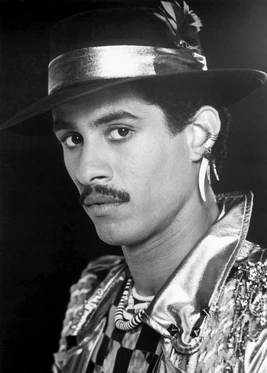
There is no single hip hop artist who goes by the stage name 'Nonstop Dancer' with a widely documented net worth. The search likely points to one of two people: Marquese Scott, an American popping dancer and viral internet figure known professionally as 'Nonstop,' or a reference to the Japanese pop song 'NONSTOP DANCER' by blank" rel="noopener noreferrer">Yōko Oginome. For this site's focus on hip hop and entertainment wealth, Marquese Scott (NonStop) is the most relevant match, and his estimated net worth as of mid-2026 sits in the range of $500,000 to $1.5 million, with $800,000 being a reasonable midpoint estimate based on available public signals.
Nonstop Dancer Net Worth: Estimate, Sources, and How to Verify

Marcus Holloway
21 Jun 2026

Who exactly is 'Nonstop Dancer'?

The phrase 'Nonstop Dancer' is not a single universally recognized artist name, which is why getting the identity right matters before any wealth estimate means anything. Here are the two most likely candidates people are searching for:
- Marquese Scott (NonStop): An American dancer from Phoenix, Arizona, who specializes in popping, waving, and tutting. He went viral globally around 2011-2012 with his YouTube videos set to dubstep and electronic music. His stage name is 'NonStop' and he is widely referred to as a 'nonstop dancer' in dance community circles. He has connections to hip hop culture through collaborations with artists and music video appearances.
- Yōko Oginome: A Japanese J-pop and kayōkyoku singer who released a song literally titled 'NONSTOP DANCER,' written by producer Tetsuya Komuro, on her album 'Non-Stopper.' This is a song title, not a performer's nickname, and is entirely outside the hip hop/rap wealth space this site covers.
For the purposes of this article, blank" rel="noopener noreferrer">'Nonstop Dancer' refers to Marquese Scott (NonStop). He is the figure whose net worth is relevant to hip hop and entertainment culture, and his career arc follows the modern digital-era monetization model that fans and researchers tracking music and dance industry wealth are most interested in.
Current net worth estimate and realistic range
Marquese Scott's net worth as of June 2026 is estimated to fall between $500,000 and $1.5 million, with a working midpoint of around $800,000. He is not a rap billionaire or even a multimillionaire by conventional hip hop standards, but he has built real, sustainable income from multiple streams tied directly to dance, digital content, and entertainment partnerships. Some searches frame “Turbo” from Breakin as having a breakout, and people often want a quick view of turbo from breakin net worth alongside other performer estimates. The wide range reflects the fact that no verified financial disclosures exist for him publicly, and estimates rely heavily on social media monetization proxies, appearance fees, and documented collaborations.
To put this in context: his wealth trajectory is more similar to a successful digital-age independent entertainer than to a major label rapper. Think of him as operating in the same ecosystem as viral YouTube creators and touring dance performers, not in the streaming-royalties-plus-publishing world that dominates hip hop wealth conversations. That distinction matters when you're reading any net worth figure attached to his name.
How these estimates are actually calculated

Net worth estimates for entertainers like Marquese Scott are constructed by aggregating public signals, not by accessing bank statements. Here is the methodology this site and most credible financial trackers use:
- YouTube revenue modeling: Using publicly visible subscriber counts and estimated view counts, analysts apply standard CPM (cost per thousand views) benchmarks, typically $1 to $5 per 1,000 views for entertainment content, to estimate annual ad revenue. Scott's viral videos accumulated tens of millions of views, which translates to meaningful but not enormous YouTube income over time.
- Social media monetization: Instagram, TikTok, and other platforms pay creators or connect them with brand sponsorships. Follower counts and engagement rates are used to estimate brand deal values, typically ranging from $500 to $5,000 per post for creators at his visibility level.
- Appearance and performance fees: Dancers at Scott's profile level can command $2,000 to $15,000 per live appearance, workshop, or event booking. Frequency of bookings is estimated from publicly announced events and social media activity.
- Music video and commercial work: Documented appearances in music videos and commercials carry production-level day rates, typically $500 to $5,000 per engagement for featured performers.
- Merchandise and brand partnerships: Any documented merch lines or ongoing brand ambassador deals are factored in at estimated retail volumes.
- Cumulative asset estimation: Annual income estimates over career years are summed, minus reasonable living expense assumptions, to arrive at a net worth range.
The honest caveat here is that all of these inputs carry significant uncertainty. CPM rates fluctuate, booking frequencies are never fully public, and personal expenses are entirely opaque. This is why a range rather than a single number is always more honest. Anyone citing a pinpoint figure like '$1,200,000 exactly' for someone like Scott is almost certainly fabricating false precision.
Where the money actually comes from
Marquese Scott's income picture is genuinely diversified for an independent performer. Here is a breakdown of his likely revenue streams and their estimated weight in his overall earnings:
| Income Stream | Estimated Contribution | Notes |
|---|---|---|
| YouTube ad revenue | 15-20% | Tens of millions of lifetime views; earnings slow as viral peak recedes |
| Live appearances and workshops | 25-35% | Dance workshops, competitions, and events are a consistent earner |
| Brand deals and sponsorships | 15-20% | Apparel, energy drink, and lifestyle brands in the dance/streetwear space |
| Music video and commercial work | 10-15% | Featured dancer roles in hip hop and pop productions |
| Merchandise | 5-10% | Branded clothing and accessories tied to his NonStop identity |
| Social media (Instagram, TikTok) | 10-15% | Sponsored content and platform creator funds |
| Teaching and choreography licensing | 5-10% | Online course sales and choreography licensing to studios |
The live appearance and workshop revenue is arguably the most stable leg of his income. Unlike YouTube ad money, which is tied to algorithm favor and trending topics, demand for in-person workshops from a dancer of his skill and reputation tends to persist as long as he stays active in the community. This mirrors how many hip hop artists who outlast their mainstream chart moments pivot to touring income as their primary financial engine.
Career timeline and how his wealth has shifted

The viral peak (2011-2014)
Marquese Scott's financial story really begins around 2011 when his popping videos set to electronic and dubstep music exploded on YouTube. During this period, his channel growth was extraordinary, and the income potential from YouTube was at a high point industry-wide because CPM rates were favorable and the platform was actively rewarding viral creators. This era also generated significant media attention, which translated into commercial bookings and music video features at premium rates. Think of this as his equivalent of a rapper's debut album moment: maximum visibility, maximum leverage.
Consolidation and diversification (2015-2020)
As the initial viral wave settled, Scott shifted toward building a more sustainable income structure. Workshop tours, dance competition appearances, and online content diversification became central. This period is where entertainers either build lasting wealth infrastructure or see their income erode. For Scott, the evidence from his continued public activity and global dance community presence suggests he navigated this transition reasonably well. YouTube revenue per view declined industry-wide during this period, but his live event income likely compensated.
Modern era (2021-2026)
The TikTok era created a second wind for performers with strong visual styles. Popping and animation-style dance content performs well in short-form video formats, giving Scott a relevant platform without starting from zero. Brand partnership rates have also increased significantly for creators with loyal, niche audiences. As of mid-2026, the combination of legacy YouTube income, active TikTok and Instagram presence, and ongoing workshop demand positions him comfortably in the upper end of the independent entertainer wealth tier, even if he is not approaching the multimillion-dollar figures associated with major hip hop artists.
Factors that could move his net worth up or down soon
Several variables could meaningfully change the net worth picture for Marquese Scott in the near term:
- Major commercial or film placement: A prominent music video feature or movie choreography credit with a major artist or production could produce a significant one-time income spike and renewed attention to his catalog, similar to what a hit single does for a rapper's streaming numbers.
- Online course or platform launch: If he launches a structured paid dance education platform or partners with an existing one (as many elite dancers have done), the royalty-style recurring income could meaningfully raise his floor earnings.
- Viral resurgence: TikTok trends are unpredictable, and a single video going viral can reset an entertainer's earning potential almost overnight. His style is well-suited to the platform's current algorithm preferences.
- Brand ambassador deal: A sustained partnership with a major apparel or lifestyle brand could add $50,000 to $200,000 annually depending on scale and exclusivity.
- Reduced touring or activity: Health, personal circumstances, or simply choosing to step back from active performance would erode the live appearance income that forms a significant portion of his earnings.
- Platform policy changes: YouTube and TikTok monetization policy shifts could impact ad revenue positively or negatively, as they have for creators across the board in recent years.
There are no publicly documented lawsuits, label disputes, or major financial liabilities associated with Marquese Scott as of the research available through mid-2026. That absence of negative signals is itself useful information: his wealth picture appears relatively clean of the debt obligations and legal expenses that can dramatically reduce a hip hop artist's actual net worth below the gross figures often cited.
How to verify the estimate and spot bad net worth claims
If you want to pressure-test any net worth figure you see for Marquese Scott or any similar entertainer, here is exactly what to look for and what red flags to watch for: If you are specifically searching for “dj xclusive mother net worth,” it is important to verify whether that name is connected to Marquese Scott or a different person entirely.
- Check YouTube analytics proxies: Tools like Social Blade provide publicly accessible estimates of a channel's monthly and annual ad revenue based on view count and subscriber data. Cross-check any net worth claim against what these tools show for his channel history.
- Look for documented deals: Legitimate wealth increases are usually traceable to documented events: a signed brand deal announced in a press release, a movie or TV credit in a verified database like IMDb, or a tour announced through official channels. If a net worth claim cites no specific events, treat it skeptically.
- Assess the source's methodology: Credible sites explain how they arrived at a figure. Vague statements like 'according to sources' or 'estimated to be worth' with no methodology attached are signs the number was pulled from another unverified site rather than independently calculated.
- Compare across multiple trackers: If one site says $800,000 and another says $5 million with no explanation for the gap, the higher number almost certainly absorbed an error from an earlier publication or fabricated the figure outright. Look for the source that shows its work.
- Factor in career stage and income type: Dancers and digital entertainers rarely accumulate wealth at the same rate as artists with publishing rights and streaming royalties. A $1 million estimate for someone in Scott's position is more plausible than $10 million, and implausibly large figures should prompt skepticism.
- Search for interviews discussing finances: Artists sometimes discuss income and business ventures in podcasts or magazine profiles. These first-person disclosures, even if partial, are among the most reliable data points available.
The broader lesson here applies beyond just this one search. Net worth figures circulate online with almost no accountability, and the range for entertainers who are not publicly traded or regularly audited can be wildly inconsistent. The same discipline that applies to evaluating a rapper's claimed net worth, looking for documented income events, realistic income multiples, and transparent methodology, applies equally here. For comparison, similar figures in adjacent spaces like DJ or breakdancer net worths show the same wide estimation ranges and the same need to triangulate across multiple signals rather than trusting any single source.
The bottom line: Marquese Scott (NonStop) has built genuine, multi-stream income over more than a decade in the entertainment space, and a net worth in the $500,000 to $1.5 million range is credible and defensible based on public evidence. Treat any figure dramatically outside that range, especially without sourcing, as a red flag rather than a revelation.
FAQ
How can I confirm I am looking at the correct “Nonstop Dancer” before trusting any net worth number?
Most “nonstop dancer net worth” claims fail because they do not prove identity (Marquese Scott vs a song title or another creator). Your first check is whether the page explicitly ties the person to verifiable entertainment activities you can cross-check, like specific dance credits, named collaborations, or official social accounts that match the same biography.
What evidence should be present for a credible nonstop dancer net worth estimate?
A realistic estimate for an independent entertainer should be supported by multiple signals, not one viral statistic. Look for consistent indicators such as workshop bookings over time, public brand partnerships, guest appearances, and sustained content output. If the estimate is based only on a single social metric (like follower count) with no linkage to income activity, treat it as weak.
Why do some sites give an exact nonstop dancer net worth number, and how should I evaluate that?
If you see a very precise figure (for example, “$1,200,000 exactly”), it is usually not derived from audited data. For non publicly traded figures, precision usually indicates fabrication or overfitting to guessy inputs, so you should prefer a range and ask what assumptions produce the low and high ends.
Is nonstop dancer net worth the same as what he makes per year?
Net worth is not the same as annual income. An entertainer can earn strong cash flow yet still have modest net worth if spending is high or savings is low. Conversely, someone with fewer recent posts could have higher net worth from past earnings. When you read “net worth,” also look for whether the sources describe ongoing income streams or only past highlights.
How do operating costs affect the accuracy of entertainer net worth estimates like this one?
If a page includes expenses such as management fees, travel costs for workshops, equipment, or production costs for content, the estimate is more likely to be realistic. Many low-quality estimates ignore operating costs, which can make the “net worth” look inflated relative to actual retained wealth.
What common mistake causes nonstop dancer net worth estimates to be too high or too low?
Watch for category errors. If someone treats him like a major-label rapper where most wealth comes from publishing and big streaming royalties, the math will drift upward or sideways. The more accurate approach is to assume a digital content plus live performance model, then sanity-check whether the estimate aligns with that ecosystem.
How can I stress-test the nonprofit dancer net worth range using observable career patterns?
To pressure-test the estimate, compare the implied spending power to the observed career pattern. For example, frequent workshop travel and repeated event appearances suggest recurring revenue, while long gaps with no bookings or partnerships can suggest reduced income. If the claimed net worth requires constant high earnings despite a slowdown in visible activity, the estimate may not hold up.
Why does a past viral spike not automatically mean the current nonstop dancer net worth is the same as the early peak?
Avoid using one-off viral peaks as your only anchor. Even if CPM or ad revenue was high during a past viral era, it does not guarantee the same revenue today. A better check is whether there is evidence of diversified monetization later, such as ongoing workshops, recurring media features, or stable short-form engagement.