
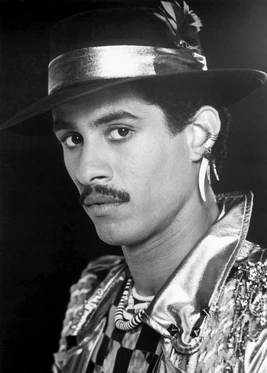
Turbo from Breakin' is Michael 'Boogaloo Shrimp' Chambers, the dancer and actor who played Tony 'Turbo' in the 1984 breakdancing film Breakin' and its same-year sequel Breakin' 2: Electric Boogaloo. His net worth is estimated at roughly $1 million to $2 million as of 2026, a figure that reflects a career built on a defining cultural moment in hip hop history rather than sustained mainstream stardom or major music industry earnings.
Turbo From Breakin Net Worth: Estimate, Sources, and How It’s Calculated

Marcus Holloway
20 Jun 2026
Who Is Turbo, and Why the Name Gets Confusing

If you searched 'Turbo from Breakin' net worth,' there is a decent chance you had to pause and wonder exactly which Turbo you were looking for. Slander DJ net worth searches come up for similar reasons, since “DJ” can refer to different people and the numbers are often recycled without solid documentation. The name has floated around hip hop and entertainment circles in more than one context.
In the world of breakdancing films, 'Turbo' refers specifically to the character Tony 'Turbo' in the 1984 MGM film Breakin', played by Michael Chambers. He was credited on screen as 'Boogaloo Shrimp,' a stage name he had already built a reputation around in the Los Angeles street dance scene before the film was made. The sequel, Breakin' 2: Electric Boogaloo (released just months later, also in 1984), kept him in the same role under the same stage credit.
The confusion comes from a few directions. First, 'Boogaloo Shrimp' and 'Turbo' are two names for the same person, and casual fans often remember one or the other but not both. Second, there are other people in hip hop who go by 'Turbo' in completely unrelated contexts, including DJs, producers, and dancers. If you have been browsing net worth sites covering figures like Nonstop, Logistix, or other breakdancing-adjacent personalities, it is easy to see how the search term gets murky.
Some search results also mix up Michael Chambers with Logistix, leading people to wonder about Logistix break dancer net worth. For this article, we are talking squarely about Michael Chambers, the man who played Turbo in the 1984 Breakin' films. Moviefone's Breakin' cast credits list Michael Chambers as Turbo in Breakin' (1984) [played Turbo in the 1984 Breakin' films](https://www. moviefone.
com/movie/breakin/16487/credits/).
The Net Worth Estimate: What the Numbers Actually Look Like
Michael 'Boogaloo Shrimp' Chambers has a publicly estimated net worth in the range of $1 million to $2 million as of mid-2026. Some celebrity net worth aggregator sites place him at around $1.5 million, and that middle figure is probably the most defensible single number given what we know about his career trajectory. He is not wealthy in the way that a platinum-selling rapper or a hip hop mogul is wealthy. But he is also not someone who walked away from the entertainment industry broke, which is unfortunately a common story for performers whose moment of peak visibility came in the mid-1980s before modern royalty structures and streaming economics existed.
To be transparent: this is an estimate, not a verified disclosure. Michael Chambers has not published financial statements, and no credible outlet has reported documented assets or income figures with original sourcing. The $1 million to $2 million range is a reasonable inference based on his known work history, residual income opportunities from iconic film appearances, and the general financial landscape for actors and performers of his profile and era.
Where the Money Comes From

Understanding Chambers' net worth means understanding the layers of income that a performer like him can realistically draw from over a 40-plus-year career in and around the entertainment industry.
Film Acting and Residuals
The Breakin' films are his most significant financial asset in terms of legacy income. Breakin' (1984) was produced on a modest budget of around $1.2 million and grossed over $38 million at the box office, which made it a genuine hit for its budget level. Breakin' 2: Electric Boogaloo followed immediately and added more box office revenue. For an actor of Chambers' status in 1984, upfront pay would have been modest, likely in the range of a few thousand to tens of thousands of dollars per film, not the backend participation deals that established stars command. However, SAG-AFTRA residuals from home video, cable, and later streaming distribution of these films would have provided ongoing, smaller income streams for decades.
Appearances, Events, and Dance Culture
Chambers has maintained a presence in breakdancing culture and nostalgia circuits long after the films. Appearance fees at conventions, dance events, hip hop anniversary celebrations, and retrospective screenings contribute to his income in a way that is hard to quantify but real. The 1980s breakdancing film genre occupies a specific, beloved corner of hip hop history, and performers associated with it have a consistent audience willing to pay for access at events.
This is a different income model than, say, a DJ or rapper who can monetize streaming plays, but it is a legitimate and ongoing revenue channel. This event-and-appearance driven model is one reason you might also want to look at nonstop dancer net worth breakdowns for similar dancers and performers.
Music and Hip Hop Adjacent Work
Chambers is primarily a dancer and actor rather than a recording artist, so direct music income (royalties from original recordings, streaming) is not a meaningful driver of his net worth. The Breakin' soundtracks, which featured artists like Ollie and Jerry and became part of the cultural fabric of early hip hop, did not generate songwriter or performer royalties for Chambers specifically. His connection to hip hop is cultural and physical rather than commercial-music-based, which is an important distinction when comparing him to other figures on the wealth spectrum.
Teaching, Coaching, and Dance Industry Work

Over the decades, Chambers has been involved in dance instruction, workshops, and mentorship in the breakdancing community. This kind of work is rarely documented publicly in financial terms, but for performers of his background it often represents a steady, if modest, income stream that supplements appearance fees and residuals.
Wealth Breakdown by Asset Type
| Asset / Income Category | Estimated Contribution | Confidence Level |
|---|---|---|
| Film acting earnings and residuals (Breakin' franchise) | Moderate, ongoing residual stream | Medium |
| Appearance fees and nostalgia events | Low to moderate, consistent | Medium |
| Real estate holdings | Unknown, not publicly documented | Low |
| Business interests or investments | Unknown, not publicly documented | Low |
| Dance instruction and workshops | Low, supplemental | Medium |
| Music or recording royalties | Negligible (not a recording artist) | High |
There is no publicly available information confirming real estate holdings, equity investments, or business ownership for Chambers. Some net worth estimates for performers in his category implicitly assume some real estate accumulation over a 40-year career in Los Angeles, which is plausible but not verified. The honest answer is that the bulk of his documented wealth-building capacity runs through entertainment work rather than passive investment assets, at least based on what is publicly known.
His Career Timeline and How the Money Shifted Over Time
Looking at Chambers' financial trajectory across different periods helps explain why his net worth sits where it does rather than higher or lower.
- Early 1980s: Pre-fame street dance scene in Los Angeles. Income would have been minimal, driven by performance gigs and local reputation. This period established the skills that led to his casting.
- 1984: Peak cultural visibility. Both Breakin' films release the same year. Upfront acting fees are the primary income, and Chambers becomes one of the most recognizable faces in breakdancing globally. The financial return, however, was not proportionate to the cultural impact, as was common for performers in this era before talent representation normalized backend deals for non-star talent.
- Late 1980s to 1990s: The breakdancing film genre faded quickly from mainstream attention. Chambers continued working in film and television in smaller roles, maintaining a professional presence but not reaching the same commercial peak. Income likely declined from 1984 highs.
- 2000s to 2010s: Nostalgia for 1980s hip hop culture began driving renewed interest in Breakin' and its cast. Chambers benefited from retrospectives, anniversary events, and the broader cultural rehabilitation of breakdancing as an art form. This period likely stabilized and modestly grew his income.
- 2020s: Breakdancing's inclusion in the Olympic Games (debuting as 'Breaking' at the 2024 Paris Olympics) brought renewed global attention to the art form and its pioneers. Chambers' association with one of the most iconic breakdancing films positions him well for continued appearances and cultural relevance.
The Olympic moment for Breaking is genuinely significant context here. When a subculture gets Olympic legitimacy, the pioneers associated with its popular history often see a real uptick in appearance demand and media interest. For someone like Chambers, whose name is tied to the most commercially successful breakdancing films ever made, that cultural tailwind is a real financial factor even if it is difficult to put a precise dollar figure on it.
How Net Worth Estimates Are Actually Made (and Why You Should Be Skeptical)
Net worth figures for performers like Michael Chambers are not derived from tax returns, bank statements, or any verified financial disclosure. They are estimates constructed from a combination of publicly known income events (film credits, documented appearances), industry benchmarks for similar performers in similar eras, and educated inference. Most celebrity net worth aggregator sites do not publish their methodology, and many simply repeat numbers from earlier sites without independent verification. This creates a feedback loop where a figure gets cited so often it starts to feel authoritative even if the original basis was thin.
For someone like Chambers, specific complicating factors include: the age of his primary career moment (1984 film economics are very different from today's), the relatively small body of documented financial reporting about him personally, and the fact that dance-focused performers have historically been underrepresented in entertainment finance coverage compared to recording artists. The $1 million to $2 million range I am presenting here is a reasonable band based on career scope and comparable performers, but I would not treat any single number as precise. If you see a site claiming a very specific figure like '$1.5 million exactly,' that precision is false confidence.
It is also worth noting that net worth and income are different things. A performer could have earned significantly more over a 40-year career in total gross income than their current net worth suggests, once you account for living expenses, taxes, periods of reduced income, and the general financial volatility that characterizes entertainment careers. This gap between lifetime earnings and current net worth is one of the most misunderstood aspects of celebrity finance across hip hop and entertainment broadly.
How to Verify This Yourself and What to Do With It

If you want to do your own due diligence on Michael Chambers' net worth rather than taking any single estimate at face value, here is a practical approach to get closer to the truth.
- Check IMDb for his full acting credits. Every verified film and television role represents a potential income event. His credit page shows his documented work across decades and is the most reliable public record of his professional activity.
- Search for recent interviews with Chambers directly. When performers discuss their careers in interviews, they sometimes reference financial realities, touring or appearance activity, or business ventures that net worth aggregators miss entirely. Dance magazine interviews, documentary features, and podcast appearances are good sources.
- Look at coverage around the 2024 Paris Olympics Breaking debut. This event generated significant media attention on breaking's pioneers, and Chambers appeared in several retrospective pieces that may contain updated career context.
- Cross-reference multiple net worth aggregator sites, but weight them equally and look for consensus ranges rather than specific numbers. If three sites say $1 million to $2 million and one says $5 million, treat the outlier with skepticism unless it cites a specific source.
- Check entertainment trade outlets (Variety, The Hollywood Reporter, Billboard) for any documented business deals, brand partnerships, or significant career announcements from the past two to three years.
- For the Breakin' films specifically, box office and production records are well documented through databases like Box Office Mojo and the AFI Catalog, giving you a baseline for understanding the commercial scale of the projects he was part of.
One genuinely useful mindset shift: treat net worth estimates for performers like Chambers as a starting point for understanding their financial story, not an endpoint. The more interesting question is not 'what is the exact number?' but 'what income structures from a 1984 film career are still generating value in 2026, and how has his relationship with the breaking community sustained his professional presence?' That framing gives you a much richer picture of how wealth works across generations of hip hop and dance culture than any single dollar figure can.
If you are researching related figures from the broader breakdancing and hip hop dance world, the financial profiles of performers in that space share some common patterns worth understanding: heavy dependence on appearance-based income, limited recording royalty streams, and significant variation between those who built business infrastructure around their fame versus those who remained primarily performers. The contrast between old-school dance film economics and the modern landscape where dance influencers can monetize directly through social media and brand deals is a genuinely fascinating shift in how this particular corner of hip hop culture generates wealth. If you are specifically looking at DJ Xclusive mother net worth, the same approach applies: verify the source and look for documented income streams rather than one repeated number.
FAQ
How can I verify that “Turbo” refers to Michael “Boogaloo Shrimp” Chambers and not a different entertainer?
Check whether the person is tied to the 1984 MGM films Breakin' and Breakin' 2: Electric Boogaloo and whether they are credited on screen as Boogaloo Shrimp. “Turbo” is used by other hip hop figures, so a match to the specific film role is the quickest disambiguation step.
Why do some net worth sites list a single exact number like $1.5 million, when the article only gives a range?
Many aggregator sites repeat previously published figures without original documentation. When you see high precision for someone who has not disclosed assets, treat the number as a guess dressed up as certainty and use the range mindset as a reality check.
What income sources are most likely included in a reasonable estimate for Turbo’s net worth?
For Chambers, the estimate is typically built around residuals from film distribution over time, plus appearance-driven earnings from conventions, screenings, and breakdancing events. Workshops, instruction, and mentorship can also contribute, even if those amounts are rarely documented publicly.
Do acting residuals and streaming really matter for a film from 1984?
They can. Home video, cable, and later streaming distribution generally create periodic residual payments, even if individual amounts are modest. The key point is that iconic film titles can keep generating payable distribution years after the release.
Could Turbo have made more money during the 1980s and still have a relatively modest net worth today?
Yes. Lifetime earnings can be higher than current net worth if taxes, living costs, gaps in work, and career volatility are significant. Net worth reflects what remains after expenses and timing, not what a person earned at the peak of popularity.
Is there any real reason to expect music royalties or streaming payouts to meaningfully raise his net worth?
For Chambers specifically, the article’s position is that he is not primarily a recording artist, so direct royalties are unlikely to be a major driver. Breakin' soundtrack success does not automatically translate to meaningful royalties for every performer tied to the film.
What are the most common mistakes people make when searching “turbo from breakin net worth”?
The biggest issues are identity confusion (Turbo meaning someone else) and result mixing (seeing numbers for other dancers or DJs and assuming they refer to Michael Chambers). Another common mistake is trusting a precise figure without checking whether the site explains the underlying income sources.
If I want to estimate it myself, what practical method should I use?
Start from plausible residual and appearance categories rather than relying on a single “net worth” number. Build a rough model: (1) residuals over decades, (2) average annual appearance/event income based on how often he appears, and (3) subtract broad life and tax realities. Then treat the output as a range, not a single figure.
Could real estate or investments be the reason his net worth looks different from what I expect?
Possibly, but there is no publicly confirmed information in the article about specific properties or business ownership. If a site assumes big holdings without evidence, that assumption can inflate estimates, so it is worth discounting claims that lack sourcing.
How does his current breakdancing visibility affect his financial picture today?
Ongoing presence in nostalgia and breaking culture tends to support steady, though not easily quantified, revenue opportunities. Consistent invitations for events and instruction can smooth income between film-era residuals and occasional media attention.